
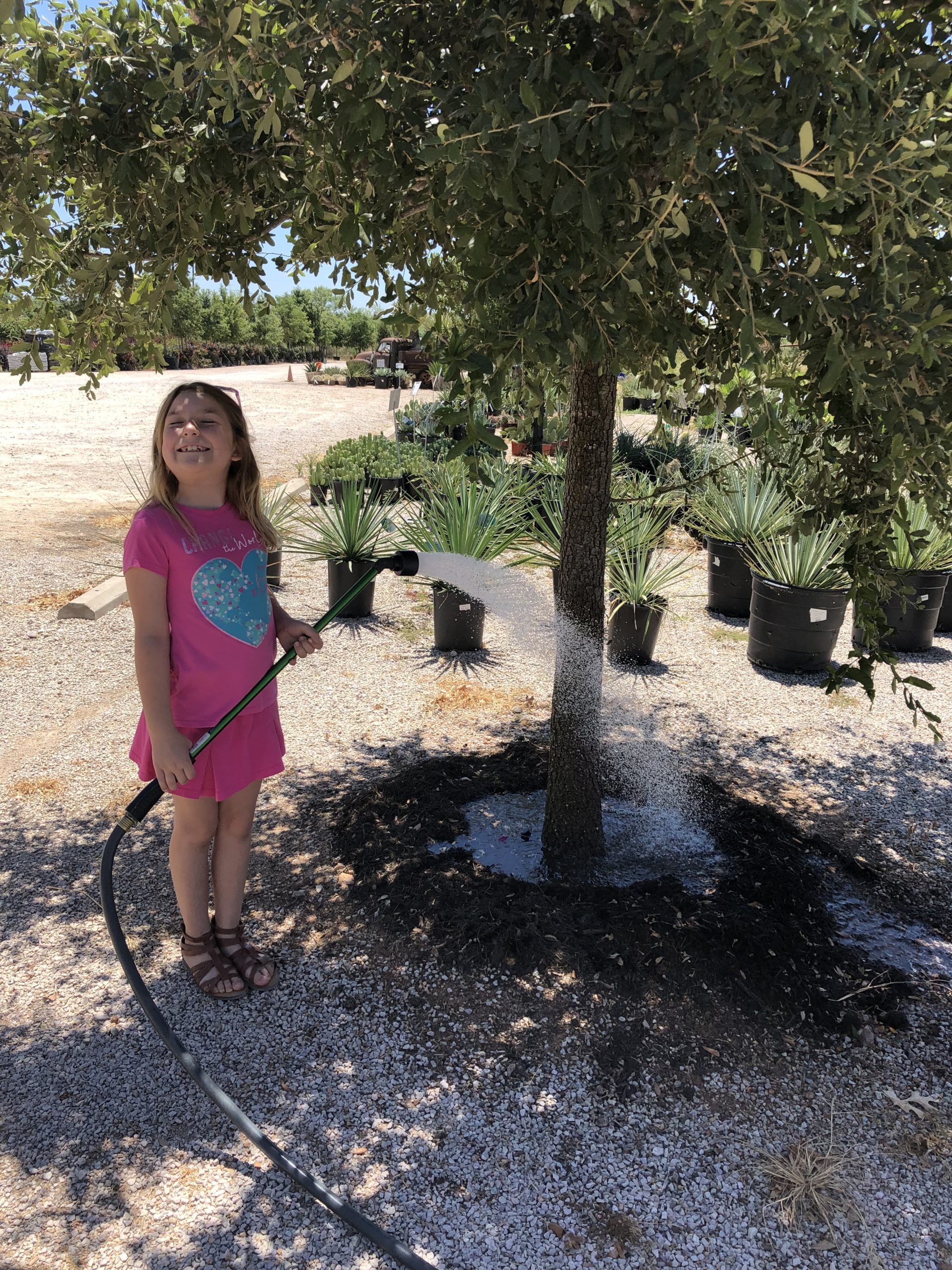
Establishing a tree in Central Texas is a labor of love. Given proper care your tree will thrive for many years to come. Please remember that rain and irrigation are not adequate for establishing newly planted trees. It can take up to one year for each inch of trunk caliper to fully establish a tree. Missing just one day of watering, especially on a hot or windy day, can mean root death for the tree from which it may not recover. Keep up the good work and you will be rewarded in shade in no time.
Watering:
-These instructions are intended for the first year only. After the first year you will begin watering further out from the trunk, eventually watering the entire area under the canopy.
-Water your tree religiously for at least one year using the following guidelines. Click HERE for more information on watering after the first year.
-At the time of planting the tree needs to be deeply watered. Hand watering is preferred, as it helps to monitor how much water is being applied to the tree. Fill the reservoir with water, and if you see bubbles, you are displacing air pockets of dry soil. Continue to fill the reservoir again until there are no more bubbles and the water slows its percolation rate.
Additional watering information
If you cannot water your trees by hand, you can also water by turning on the hose and laying it inside the mulch reservoir. Place the hose about six inches from the trunk, running it at a steady stream for about thirty minutes. If the reservoir does not fill up evenly, move the hose to the other side and repeat watering.
If you have planted a tree larger than a 45 gallon size, remember to apply an appropriate amount of water to reach the bottom of the original root ball. This might take up to 45 gallons of water.
Bubbler irrigation can be effective if it is on its own irrigation zone. Set the zone to run daily in the summer the first year the tree is planted. Remember, bubbler irrigation waters only near the trunk and it is not intended to water the tree throughout its life. Two bubbler heads should be installed on trees 45 gallon size or larger.
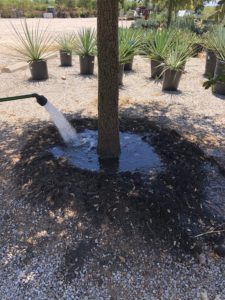
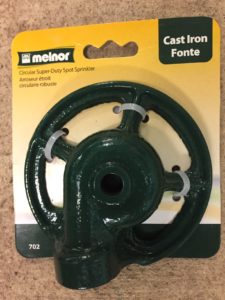
Saturate the entire root ball and a foot or so of the soil area beyond. Water deeply and DO NOT RELY ON RAIN OR SPRINKLER IRRIGATION! Please note that the chart below is just a general watering guideline. Consider your soil type, as different soils hold water differently.
Guidelines for Watering Your Tree for the First Year
| Temperature | Frequency of Watering |
| 90-100 Degrees | every day |
| 80-90 Degrees | every other day |
| 50-80 Degrees | twice a week |
| Winter | once a week |
Clay and other poorly draining soils may not require as frequent watering as indicated above. Overwatering or having trees staying too wet can be as damaging as trees being too dry. The best way to check for soil moisture is to dig down under the mulch 3 or 4 inches and feel if the soil is moist. Better yet, use a moisture meter placed halfway between the trunk and the edge of the root ball. If the meter reads to the “dry side”, water it that day. If the meter reads to the “wet side”, do not water but check it again the next day.
Fertilization:
We recommend an organic program for the long term health of your trees. Trees should be fertilized each spring and fall with an organic tree and shrub fertilizer such as MicroLife Ultimate 8-4-6. Cover the entire area under the canopy of the tree. Do not use tree fertilizer spikes as they concentrate fertilizer in small areas. Do not use weed and feed fertilizer on your lawn as your tree roots can grow one to two times the height of the tree out from the tree in all directions. The selective broadleaf herbicide can damage tree roots and weaken the tree, making it more susceptible to insects and disease.

Application of 1/8” of topdressing of premium compost once a year in the spring or fall around the drip line of your tree will help the microorganisms in your soil and give your tree the boost it needs.
Chemical fertilizers may be used if desired. Follow package directions or ask us for application advice. Do not apply quick-release fertilizers to dry soil and avoid fertilizing in hot weather.
–Be sure to spread all fertilizers uniformly around the entire drip line of the tree. Do not concentrate the fertilizer around the trunk or inside the mulch reservoir. It is very important that you water all fertilizers and compost applications in well.
Mulching:
Reapply mulch annually to maintain a 2-3” layer of mulch around the tree. We recommend a double grind shredded native hardwood mulch that has been aged for a minimum of a year. Keep mulch pulled back 3” to 6” from the trunk. Do not allow grass to grow up to the trunk of a tree, as mower and string-trimmer damage is irreversible.
Weed Control:
NEVER USE WEED AND FEED TYPE FERTILIZERS OR BROADLEAF HERBICIDES in any areas near trees. You may apply pre-emergent herbicides to the lawn surrounding the tree to prevent weed seeds from germinating without harming the tree.
Staking and Deer Caging:
-It is the customer’s responsibility to keep the tree staked until rooted well. You may remove the staking when you gently move the trunk back and forth and you do not see the edges of the original root ball move at all.
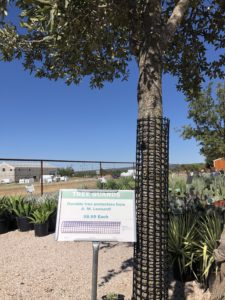
If you have deer, be sure to put a cage around your tree trunk to keep them from rubbing on the trunks. Trunk damage does not repair itself. It is better to prevent it by caging with wire or with our black plastic tree guards, which let air circulate. Do not use black corrugated sewer pipe as it inhibits air circulation and may keep the trunk too moist or even harbor insects or disease.
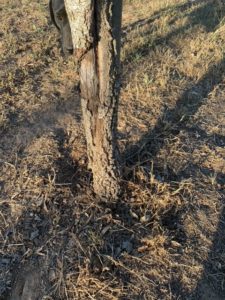

Mary Kay, i just purchased Chocolate Mimosa from BB. As it is June and getting HOT, should I plant the mimosa now OR wait until Oct/November, keeping it in the container it came in or putting in a larger container for the next 4-5 months??? I know mimosas can get too wet so don’t know if I should follow regilar watering guide for new trees their first year getting established…
You will have to water the tree every day whether it is in a pot or planted in the ground, and it will be much easier to keep it watered in the ground, as pots dry out so fast. If your soil is well drained you should have no problem following the guidelines. If you have a clay soil, you should probably plant it “high”. Please let me know if you have additional questions.