What are “chilling hours”?
Some fruit trees, including peaches, plums, apricots, and apples, require a certain number of chilling hours to bloom and set fruit.
Chilling hours are usually calculated between October 1 and February 28 or 29. They are measured as hours between 32 and 45°F, or sometimes as hours below 45°F.
When selecting a variety, remember chilling requirements are general guidelines, not strict rules. A 600-hour variety may grow in 400- or 800-hour areas. However, differences greater than 200 hours can cause serious problems.
Flower and leaf buds need sufficient chilling to overcome dormancy and develop normally.
What happens if a tree does not receive enough chilling hours?
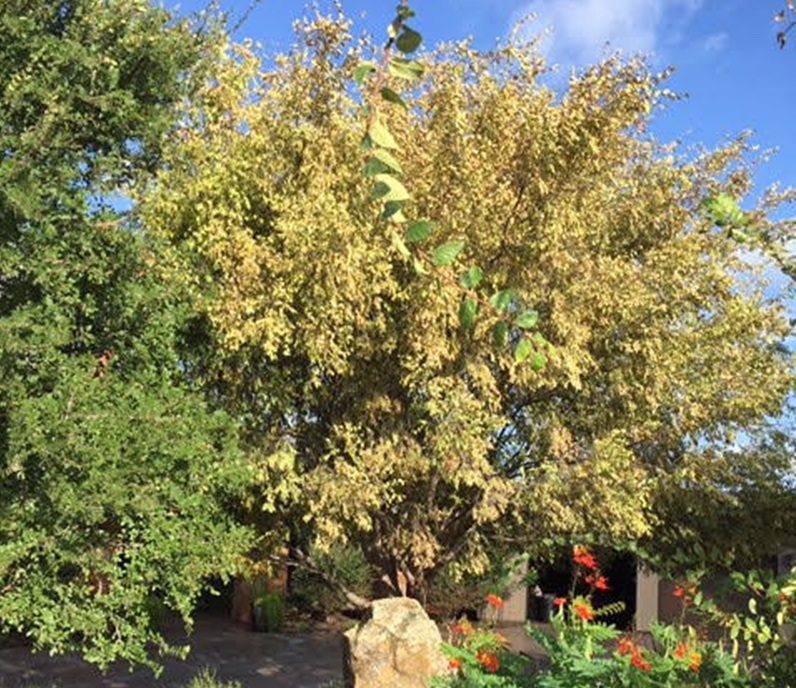
If a variety does not receive enough chilling hours, it will not bloom or grow normally. This year, most of Central Texas lacked adequate chilling hours for many peach varieties.
Burnet County is considered an 800 chilling hour zone. We usually plant peaches requiring 600–800 chilling hours. Some winters, we receive only about 500 chilling hours.
What does this mean for your trees? You may see no blooms or only a very light bloom. Trees may leaf out very late, and leaves may expand slowly.
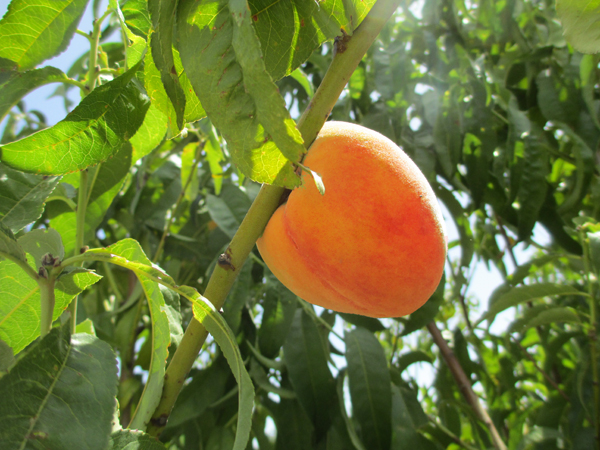
Fruit production depends on the variety. Low-chill varieties may produce some peaches. High-chill varieties may produce none and show delayed leaf development.
How can I help a tree that did not receive enough chilling hours?
Keep up regular summer watering so leaves can produce carbohydrates for next year’s crop. Water under the entire canopy, not just at the base.
One year of insufficient chilling usually won’t kill a tree but can weaken it, making it more prone to insects and disease. Proper cultural practices help minimize damage. Some varieties show more lasting effects than others.
Trees with light canopies may get sunscald. Paint the top of scaffold limbs and south-facing trunk with white paint if needed. After trees have leafed out fully, prune dead branches to encourage healthy growth of living branches