How to Attract Butterflies to Your Central Texas Garden (Year-Round Guide)
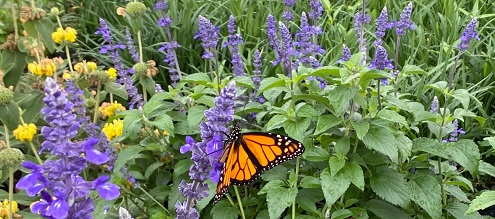
If you want a garden that feels alive, colorful, and constantly in motion, butterflies are the answer. In Central Texas, you can attract a wide variety of butterflies by planting the right mix of native and well-adapted nectar plants that bloom across the seasons. With a little planning, your garden can support butterflies from early spring through late fall.
Let’s walk through how to build a butterfly-friendly garden that works with our climate—not against it.
Why Butterflies Love Native and Adaptive Plants
Butterflies rely on nectar for energy, and they prefer plants that evolved alongside them. Native plants, in particular, offer the best nutrition and are easier to maintain in Central Texas soils and weather patterns. Adaptive plants—those that aren’t native but thrive here—can also play an important supporting role.
By choosing a mix of both, you ensure continuous blooms and a steady food source.
Note: Native Plants will have a # after their name.
Spring Bloomers: Kickstart the Season
Early nectar sources are critical as butterflies emerge from winter dormancy.

Blackfoot Daisy (Melampodium leucanthum) #
A Central Texas favorite with delicate white flowers. It blooms heavily in spring and often continues into fall. Grown as a short-loved perennial, it is evergreen and requires excellent drainage. It grows about a foot tall and two feet wide. It is not reliably deer resistant.
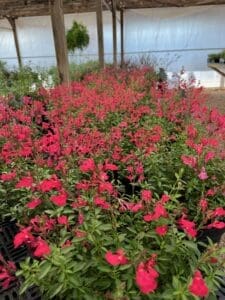
Salvia greggii (Autumn Sage) #
Despite the name, this plant blooms in spring and fall. Its red, pink, or coral flowers attract both butterflies and hummingbirds. Spent blooms may be “deadheaded” by bundling the top of the plant in your hand and pruning below the blooms into the green foliage. This will keep it tidy as well. It is deer resistant in most areas.
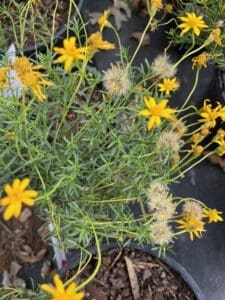
Damianita (Chrysactinia mexicana) #
Damianita is of the earliest natives to bloom in the spring. This small evergreen perennial grows only about 1′ x 1′. It has pleasantly fragrant foliage which is distasteful to deer.
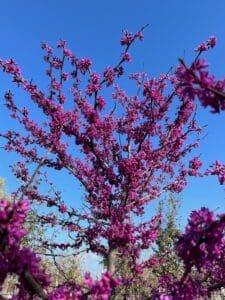
Texas Redbud (Cercis canadensis var. texensis) #
This native tree grows to about 20 feet tall and 20 feet wide. The blooms appear in February when few plants are blooming. It will grow in full sun and also as an understory in dappled shade.
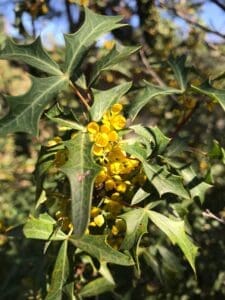
Agarita (Berberis trifoliata) #
This evergreen native woody shrub can be found in full sun to shade. Yellow flowers appear in February when few plants are blooming. The fragrant flowers produce and edible red fruit that is attractive to wildlife and also makes a delicious jelly. The spiny leaves keep the deer at bay.
Summer Stars: Heat-Loving Nectar Plants
Central Texas summers are intense, so you need tough plants that keep blooming through the heat.
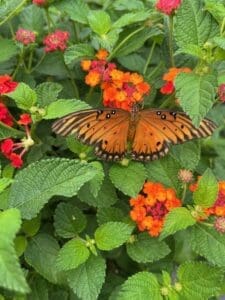
Lantana (Lantana urticoides # and hybrids)
One of the best butterfly plants for Texas. Native Texas Lantana thrives in heat and drought, producing clusters of bright orange blooms all summer. It grows about 4′ tall and wide. Hybrid Lantana also attracts butterflies, but may not be as winter hardy as our native species.
Only Texas Lantana, Lantana urticoides is native.
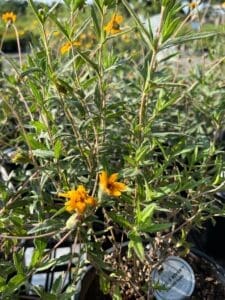
Zexmenia (Wedelia acapulcensis var. hispida) #
This hardy herbaceous native perennial produces cheerful yellow flowers that butterflies flock to, even in extreme heat. Summer pruning will keep it tidy. Grow this florific plant in sun to part shade. It is somewhat deer resistant in some locations.
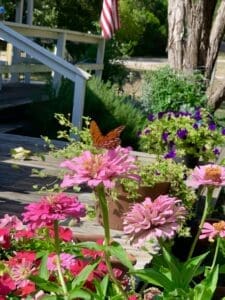
Zinna (Zinnia spp.)
This annual flower is stellar at attracting butterflies! Zinnias bloom all summer long, providing precious nectar to a wide variety of butterflies. Plant from transplants or direct seed into garden in full sun to mostly sun. It is considered deer resistant in some locations.
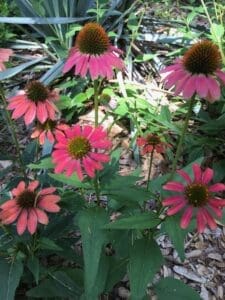
Purple Coneflower (Echinacea purpurea)#
A classic pollinator plant with bold blooms that usually stays under a foot tall. Use as a short-term perennial or re-seeding annual. It handles heat well once established. It is not reliable deer resistant.
Note: Cultivars (cultivated varieties) are considered non-native.
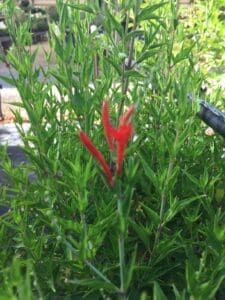
Flame Acanthus (Anisacanthus quadrifidus var. wrightii) #
A standout shrub with orange-red tubular flowers that bloom in the hottest months.
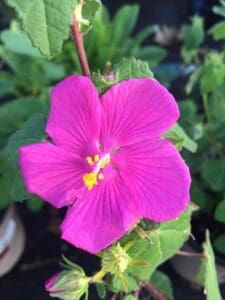
Rock Rose (Pavonia lasiopetala) #
Rock Rose is a native herbaceous perennial that produces pink flowers from spring to fall. It grows about three foot tall and wide and will bloom in sun or shade. Powdery mildew is sometimes a problem but can be pruned off as a control measure. I have not known it to be deer resistant.
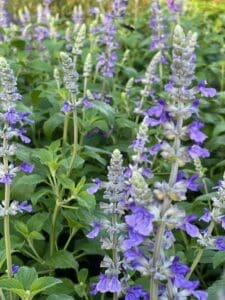
Salvia ‘Mystic Spires’ (Salvia x ‘Balsalmisp’)
This shorter version of the native Indigo Spires Salvia only grows 18″-24″ tall and 18″-20″ wide. It is an herbaceous perennial that comes back reliably from the roots every spring. Butterflies, bees and hummingbirds all love the blooms. It is considered very deer resistant and will grow in full to part sun.
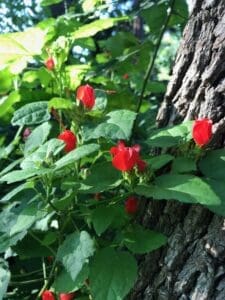
Turk’s Cap (Malvaviscus arboreus var. drummondii) #
This spreading herbaceous perennial will tolerate sun, part sun or shade. It’s height is variable from two to six feet tall, with shorter specimens usually found in full sun. Cut the tall stems back to the ground in late February. The flowers are loved by butterflies and hummingbirds and the Turk’s cap-shaped fruits are loved by wildlife. I have not known it to be deer resistant.
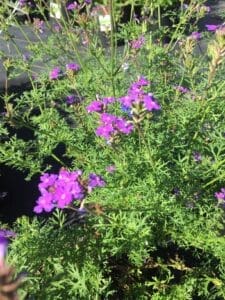
Prairie Verbena (Glandularia bipinnatifida) #
This annual to short-lived perennial keeps a low profile, growing only to about a foot tall.
Fall Favorites: Fuel for Migration
Fall is a critical time, especially for migrating species like monarchs. Nectar plants are more important than the Monarch’s food plant milkweed at this time of the migration. Nectar is essential for stamina to get them to their overwintering habitat.
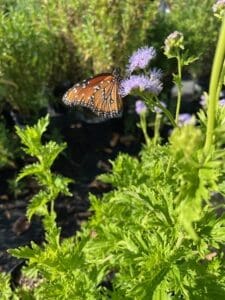
Gregg’s Mistflower (Conoclinium greggii) #
This plant is a butterfly magnet. Its soft blue blooms appear in late summer and fall, drawing in clouds of butterflies. Give this herbaceous perennial room to spread in full to part sun. I have seen it grow anywhere from two to three feet tall, and it can easily spread six feet!
It is reliably deer resistant.
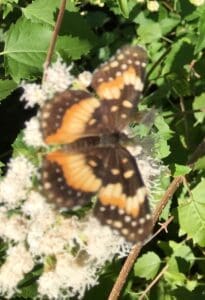
White Mistflower (Ageratina havanensis) #
This native deciduous woody shrub provides a smattering of spring blooms but really explodes with white blooms in the late summer and fall. It performs best when pruned back hard in late winter, and can grow 2′-6′ tall. I do not know if it is reliably deer resistant.

Fall Aster (Symphyotrichum oblongifolium) #
Plant this stunning purple bloomer in full sun to part sun. Growing 1′-3′ tall, it will spread by stolons and colonize unless controlled. While it will give some blooms in the spring it absolutely explodes with color in the fall, just when the migrating butterflies need the nectar. Cut back the tops as they finish blooming, but leave the “winter rosette” that will remain evergreen throughout the winter. If the plant needs trimming to control height, use July 4th as your deadline.
I do not consider this plant to be deer resistant in all locations.
Don’t Forget Host Plants
While nectar plants feed adult butterflies, host plants support caterpillars. Without them, butterflies won’t complete their life cycle.
A few essential options:
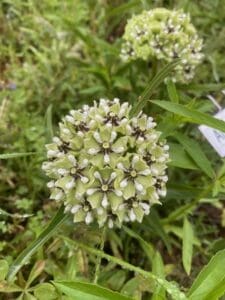
Milkweed (Asclepias spp.) #
Required for monarch butterflies,as milkweed is their ONLY host plant. It is most need when the Monarchs are reproducing vs. migrating.
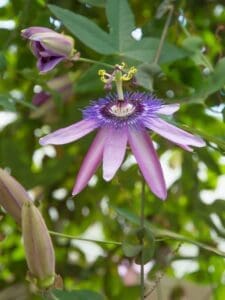
Passionvine (Passiflora incarnata) #
While this native species is often hard to find in the nursery trade, all species of Passion Vine can serve as a host plant for Gulf fritillary butterflies. Be prepared for all the leaves to disappear when the caterpillars are feeding!

Parsley, dill, and fennel – Favorites of Black swallowtail caterpillars
Expect some leaf damage—this means your garden is working.
Fall Aster (Symphyotrichum oblongifolium)
Fall Aster is the host plant for the Pearl Crescent Butterfly
White Mistflower (Ageratina havanensis)
White Mistflower is the host plant for the Bordered Patch Butterfly.
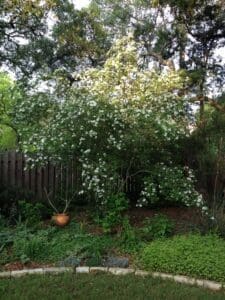
Anacacho Orchid Tree (Bauhinia congestus)
Anacacho Orchid Tree is the host plant for the Long-tailed Skipper Butterfly.
Flame Acanthus (Anisacanthus quadrifidus var. wrightii) #
Flame Acanthus is the host plant for the Crimson Patch Butterfly.
The key to attracting butterflies year-round in Central Texas is succession planting. Choose plants that bloom in different seasons so something is always flowering. When you combine spring bloomers like winecup, summer performers like lantana, and fall magnets like mistflower, you create a reliable habitat that butterflies return to again and again. A butterfly garden is more than just beautiful—it supports local ecosystems and brings your outdoor space to life. By choosing native and adaptive plants suited to Central Texas, you’ll reduce maintenance, conserve water, and enjoy a steady stream of winged visitors. Start small, plant intentionally, and let nature do the rest. 🦋
Design Tips for a Butterfly Garden
Create a Continuous Bloom Cycle
Final Thoughts