TIPS FOR YOUR
GARDEN & LANDSCAPE

Citrus Harvesting: Is It Ripe Yet?

Knowing when to harvest any citrus fruit involves the question of the degree of maturity. Because citrus pass from immature to mature to over- mature slowly while on the tree, the fruit can be harvested over a period of months with small changes in fruit quality. Fruit color is a poor indicator of ripeness. Many fruits have fully colored rinds a long time before they are “ripe”, and others are green when sugars are high enough to make the fruit sweet. Citrus does not increase in sweetness or ripen more [...]
By |2020-07-22T16:21:16-05:00March 28th, 2019|Fruit & Nuts|

February Gardening Checklist

February Gardening Guide for Central Texas What to Plant, Prune, and Protect This Month February is a pivotal month for Central Texas gardeners. While winter isn’t quite finished, the soil is warming, cool-season crops are thriving, and proper timing now sets the stage for a successful spring. Here’s what to focus on in your vegetable garden, landscape beds, trees, and lawn this month. 🌱 Vegetables: Plant Early, Protect From Freezes Onions Onion transplants should be planted before mid-February for best results. Getting them in the ground early allows bulbs to [...]

Using Oil Products to Control Insects and Disease

We now have available to us a wide range of oil products to use as alternatives to synthetic insecticides and fungicides. These include oils distilled from petroleum and oils extracted from plants and animals. Petroleum oils (including mineral oils) are highly refined, paraffinic oils that are often referred to as horticultural spray, summer oil, spray oil or white mineral oil. We recommend Bonide “All Seasons Spray Oil” for late winter insect and disease control. (The antiquated term “dormant oil” referred to the heavier, less refined oils produced in the past [...]

By |2021-01-12T11:55:48-06:00February 13th, 2019|Insects, Disease|

Crape Murder!

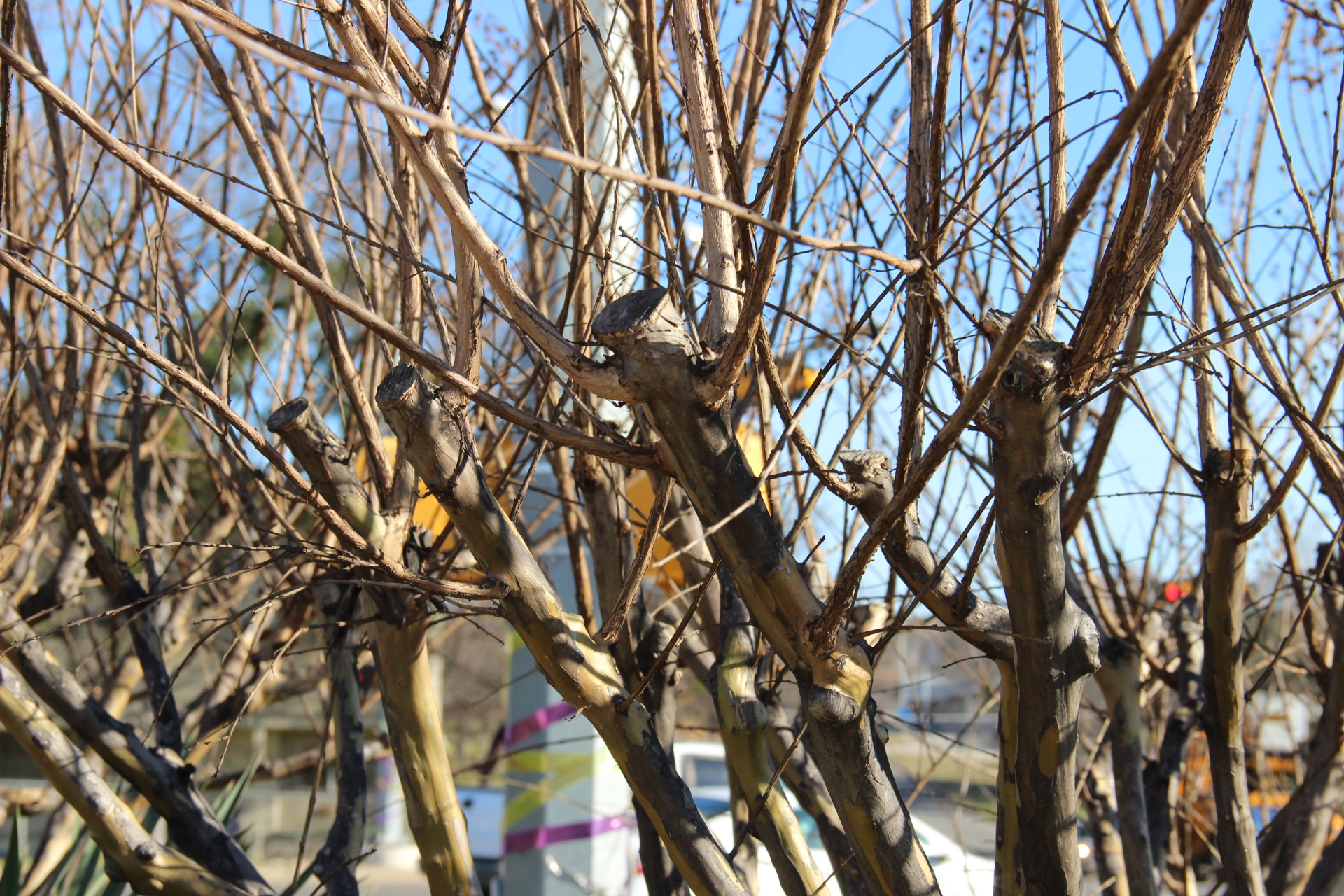
Is anyone thinking about murdering their Crape Myrtles this year? Is your yard crew "conditioned" to cut back your Crapes to NUBS???? Unfortunately, this practice began long ago, before we had choices in mature heights of our Crape Myrtles. They were planted too close to houses, and their height came too close to the eaves and gutters of the houses. Sooooo......the answer was to cut them back each year, thinking that this would not only control their height, but promote more blooms as well! This has been undeniably proven to be WRONG! [...]

By |2021-12-13T12:37:34-06:00January 30th, 2019|Trees|

Growing Blueberries in Central TX

Rabbiteye blueberries can be grown successfully in whiskey barrel sized pots in Central Texas. Because they require acid soils, use a quality potting soil mixed with 1/3 sphagnum peat moss. The pot should drain well, and no saucer should be placed under the pot to ensure thorough drainage. Blueberries require full sun to produce well. Use a fertilizer formulated for acid-loving plants, such as an Azalea/Camellia/Gardenia fertilizer. Do not apply any fertilizer the first year. Starting the second year, fertilize in late winter to early spring. DO NOT use a [...]

By |2022-03-15T14:11:53-05:00January 17th, 2019|Fruit & Nuts|

Poinsettia Care During the Holidays

Poinsettias are such a symbol of the Holidays, and can be kept fresh-looking longer with just a few easy care instructions. Locate your Poinsettia close to a bright window if possible. The bracts will continue to “color up” with sufficient light. If you are satisfied with the color, you may display the plant in a darker area, but be aware that the color might fade. Check the soil daily for water. When the surface of the soil is dry to the touch, or if the pot feels light, remove the [...]

By |2018-12-09T11:44:41-06:00December 9th, 2018|Plants|

December Gardening Checklist

December Gardening Checklist Vegetable Gardens: Plant lettuce, radish and spinach from seed or transplants. Cover whenever frost or freeze is expected. Prepare for January planting of onions. Make a planting plan for spring that includes crop rotation. Lawns: Water lawns with 1” of water if it hasn’t rained 1” in the last 2-3 weeks. Remove any leaves that have fallen so that water can get to the soil and the leaves don’t shade the grass (especially St. Augustine, which may have some green leaves) during the winter months. Winterize your [...]

By |2025-12-16T12:43:37-06:00December 2nd, 2018|Monthly Gardening Checklist|

Cyclamen Care

Cyclamen come to us from the Mediterranean region and North Africa. They revel in cool, but not cold, temperatures, and provide us with flowers for several weeks each season. Florist Cyclamen come in shades of red, pink, white, purple and salmon. Some varieties are fragrant, some reach 7”-8” tall, and others may reach 12”-18” tall. They are grown from a corm, which is bulb-like structure, and can be kept over as a perennial as long as they are allowed to go dormant in the summer season. (Or not, as you [...]

By |2021-11-10T10:02:36-06:00November 28th, 2018|Plants|

November Gardening Checklist

Trees and Shrubs The best planting season for trees and shrubs is now through mid-March. Root systems will establish well in the winter months, requiring less frequent watering than in the spring and summer establishment period. When the heat hits in late spring, your plants will benefit from the “head start” on root establishment!   Mulch: Trees and shrubs will benefit from an additional layer of mulch to protect their roots in the winter and to conserve moisture. Pull the mulch away from trunks and stems, as the mulch will [...]

Establishing Newly Planted Trees and Shrubs in the Winter

Any tree that has been planted within the past two years should be monitored for watering during the winter months. Any tree that was in a 100 gallon pot or larger when planted should be monitored for several years beyond that, as larger trees take longer to fully establish.  PLEASE DO NOT RELY ON RAIN OR LAWN IRRIGATION TO ESTABLISH NEWLY PLANTED TREES OR SHRUBS. REGULAR DEEP SOAKING WITH A HOSE IS REQUIRED TO ESTABLISH TREES AND SHRUBS, EVEN IN THE WINTER MONTHS. EVERGREEN TREES AND SHRUBS: Evergreen trees and [...]

By |2024-12-19T09:50:42-06:00November 18th, 2018|Trees, Plants|

Helping the Monarch Migration

Have you seen the Monarchs yet? Every year, I watch in expectation for the annual migration to pass through our area. I’ve been planting nectar plants all year in anticipation! Most of us have heard about the recent decline in the population of the Monarch, and how the use of herbicide-tolerant crops in the mid-west has limited the Monarch’s larval food plant, milkweed. We now have new information on how important the nectar plants are for the adult Monarch on the long migration to its Mexico breeding grounds in the [...]

By |2018-10-15T10:27:41-05:00October 15th, 2018|Insects|
Go to Top