


When Are Sweet Potatoes Ready to Harvest in Central Texas?
Sweet potatoes are a warm-season crop that thrive in Central Texas, but knowing when to harvest sweet potatoes makes a big difference in flavor, size, and storage quality.
The best starting point is the recommended maturity date for your specific variety. Most sweet potatoes are ready to harvest about 90–120 days after planting, with many varieties reaching maturity around 110 days. Check the information that came with your slips or variety for the most accurate harvest window.
As harvest time approaches, watch the plants for other signs of maturity. The vines may begin to yellow or decline as the season winds down. However, don’t rely on vine appearance alone. Sweet potatoes develop underground, so the days to maturity for your variety provide the best guide.
In Central Texas, plan your harvest before the first hard freeze. Sweet potatoes are sensitive to cold temperatures, and chilling injury can reduce their storage quality.
Choose the Right Day to Harvest
Whenever possible, harvest sweet potatoes on a dry, sunny day when the soil is not too wet. Wet soil makes digging more difficult and can leave the roots muddy and more susceptible to damage.
Before you start digging, pull the vines aside so you can clearly see where the plant is growing. This simple step helps you avoid accidentally spearing the sweet potatoes with your digging tool.
How to Harvest Sweet Potatoes Without Damaging Them
Freshly harvested sweet potatoes bruise easily, and even small cuts or punctures can lead to rot during storage. Take your time when digging.
I prefer using a flat-tined garden fork rather than a shovel. Start digging approximately 12 to 18 inches away from the base of the plant. This gives you plenty of room to avoid the sweet potatoes clustered around the plant.
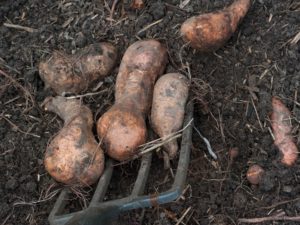
Follow these steps:
- Pull the vines away from the planting area so you can see where the plant is growing.
- Insert the flat-tined fork about 6 inches deep into the soil, well away from the plant.
- Angle the fork gently toward the center of the plant.
- Lift the soil slowly to loosen the sweet potatoes.
- Remove the sweet potatoes by hand as you uncover them.
- Handle the roots gently to prevent cuts, bruises, and broken skin.
Don’t toss, drop, or throw freshly dug sweet potatoes into a bucket. Bruising may not be obvious at harvest, but damaged areas can develop into rot during storage.
Should You Wash Sweet Potatoes After Harvest?
No. Don’t wash sweet potatoes before curing them.
Instead, let excess soil dry naturally and gently brush away loose dirt. Avoid scrubbing the roots because washing and rubbing can damage their delicate skin.
If some soil remains on the sweet potatoes, that’s perfectly fine. You can clean them more thoroughly immediately before cooking.
Cure Sweet Potatoes to Make Them Sweeter and Improve Storage
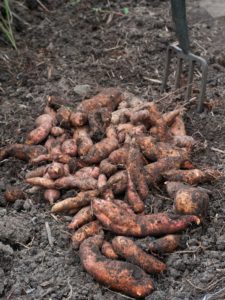
One of the most important steps after harvesting is curing sweet potatoes.
Curing allows minor scratches and abrasions to heal while helping the roots develop their characteristic sweetness. It also improves their ability to withstand long-term storage.
Sweet potatoes don’t reach their best eating quality immediately after digging. The curing process gives the roots time to convert stored starches into sugars and develop better flavor.
How to Cure Sweet Potatoes
After harvesting, handle the roots carefully and remove loose soil without washing them.
Then place the sweet potatoes in a warm, humid, well-ventilated location. The ideal curing conditions are approximately 80–85°F with high relative humidity, around 85–90%, for about 7–10 days.
Keep the sweet potatoes out of direct sunlight while they cure. Good air circulation helps prevent mold and rot.
A warm garage, enclosed porch, greenhouse, or other suitable space can work well in Central Texas, provided temperatures and humidity stay within a reasonable range.
Do not refrigerate sweet potatoes during curing.
How Does Curing Make Sweet Potatoes Sweeter?
Curing does more than heal the skin. During curing and subsequent storage, sweet potatoes undergo changes that increase the sugars available for eating. That’s why a properly cured sweet potato usually tastes noticeably sweeter and has a better texture than one cooked immediately after harvest.
For the best flavor, give your freshly harvested sweet potatoes time to cure before cooking them.
How to Store Sweet Potatoes After Curing
Once the sweet potatoes have finished curing, move them to a cool, dry, dark, and well-ventilated location.
For long-term storage, aim for a temperature of approximately 55–60°F. Avoid areas that become too cold, too hot, or damp.
Do not refrigerate raw sweet potatoes. Refrigerator temperatures are too cold for proper sweet potato storage and can negatively affect flavor and texture. Refrigeration is appropriate for cooked sweet potatoes, not uncooked cured roots.
Store the sweet potatoes in a container that allows air circulation, such as a ventilated box, basket, or crate. Avoid airtight plastic bags.
Check your stored crop periodically and remove any roots that show signs of decay. One rotting sweet potato can quickly affect those touching it.
Under good storage conditions, properly cured sweet potatoes can remain in good condition for several months, often around 5–8 months, depending on the variety and storage environment.
Central Texas Sweet Potato Harvesting Tips
Central Texas gardeners face some unique challenges when harvesting and storing sweet potatoes. Keep these tips in mind:
- Count the days after planting. Start with your variety’s recommended maturity time, often around 110 days.
- Harvest before a hard freeze. Cold temperatures can damage sweet potatoes and reduce storage quality.
- Harvest when the soil is relatively dry. Muddy soil makes digging harder and increases the chance of damaging the roots.
- Use a digging fork carefully. Start 12–18 inches away from the plant and work toward the center.
- Handle sweet potatoes gently. Bruises, cuts, and punctures can lead to storage problems.
- Don’t wash them before curing. Let soil dry and brush off loose dirt instead.
- Cure for 7–10 days. Warm temperatures and high humidity help heal the skin and improve flavor.
- Store around 55–60°F. Keep cured sweet potatoes dark, dry, and well ventilated.
- Never refrigerate raw sweet potatoes.
- Inspect your crop regularly. Remove damaged or rotting roots before they affect the rest of your harvest.
Enjoy Your Central Texas Sweet Potato Harvest
Growing sweet potatoes in Central Texas can produce an abundant harvest, but the work doesn’t end when you dig the roots from the ground. Knowing when to harvest, digging carefully, curing the roots properly, and storing them under the right conditions will give you sweeter, better-quality sweet potatoes that last for months.
If you grow your own sweet potatoes, don’t rush the process. Give your harvest the time it needs to cure, and you’ll be rewarded with better flavor and a longer-lasting crop.
Quick Harvest Checklist
☐ Check your variety’s days to maturity
☐ Plan to harvest before a hard freeze
☐ Choose a dry day when the soil isn’t too wet
☐ Pull the vines aside before digging
☐ Dig 12–18 inches away from the plant
☐ Use a flat-tined fork and work carefully
☐ Handle roots gently
☐ Don’t wash freshly harvested sweet potatoes
☐ Cure for 7–10 days at about 80–85°F and high humidity
☐ Store cured roots at approximately 55–60°F
☐ Check stored sweet potatoes regularly for rot



Leave A Comment