


Are Your Texas Persimmon Trees Dropping Leaves? Lace Bugs May Be the Culprit
If your Texas Persimmon tree looks unhealthy, has mottled leaves, or is dropping foliage during the summer, you’re not alone. Many of our customers across Central Texas have reported the same problem.
The culprit is often lace bugs, a common summer pest that feeds on Texas Persimmon trees.
How to Identify Lace Bug Damage on Texas Persimmon Trees
Lace bugs feed on the undersides of leaves with their piercing-sucking mouthparts. As they remove plant sap, they leave the upper leaf surface looking mottled, speckled, or bleached.
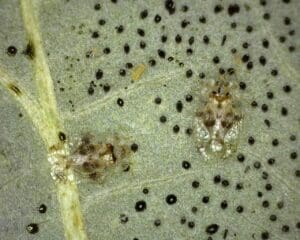 Turn over an affected leaf and look closely. You’ll likely find:
Tiny lace bugs with delicate, lace-like wings
Small black spots, which are the insects’ droppings (frass)
Eggs or immature insects clustered on the underside of the leaf
Although these insects are very small, you can usually see them without magnification.
Do Lace Bugs Permanently Damage Texas Persimmon Trees?
Fortunately, lace bugs rarely cause permanent damage to healthy Texas Persimmon trees.
They mainly affect the tree’s appearance. Damaged leaves often fall prematurely, especially during the heat of summer. Healthy trees usually replace those leaves with fresh growth. If the damage occurs in fall, the tree would soon shed its leaves naturally anyway.
By the time most homeowners notice the damage, the insects have often completed much of their feeding. In many cases, spraying is unnecessary. Instead, monitor new growth and inspect leaves regularly. If you detect lace bugs early, treatment may be worthwhile.
Other Plants Lace Bugs Attack
Lace bugs don’t just feed on Texas Persimmon trees. In Central Texas, they commonly infest:
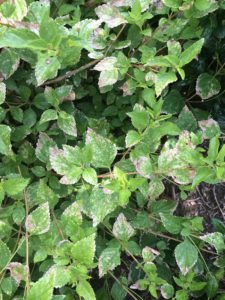
Bur Oak
Lantana
Inspect the undersides of leaves on these plants during hot weather, especially if you’ve experienced lace bug problems before.
Meet Lacewing: A Beneficial Insect That Eats Lace Bugs
Don’t confuse lace bugs with lacewings.
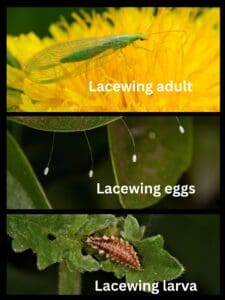
Despite their similar names, lacewings are among the garden’s most valuable beneficial insects. Both adults and especially the larvae consume large numbers of lace bugs, aphids, and other soft-bodied pests.
You may have already seen lacewing eggs attached to tiny white stalks on your plants. Those eggs hatch into voracious predators that help keep pest populations under control naturally.
Whenever possible, protect these beneficial insects by avoiding unnecessary insecticide applications.
How to Treat Lace Bugs Organically
Before treating, consider whether the infestation is severe enough to justify spraying. Organic products can still kill beneficial insects that are helping control the problem.
Bonide All Seasons Horticultural Oil
My preferred treatment for lace bugs is Bonide All Seasons Horticultural Oil, but timing is critical.

For best results:
Apply when temperatures are between 45°F and 85°F
Spray only when humidity is below 50%
Choose conditions that allow the oil to dry quickly
The oil works by coating and suffocating the insects.
Avoid applying horticultural oils during the hottest part of summer. Temperatures above 85°F can injure your Texas Persimmon tree. This warning applies to all oil-based products, including neem oil.
Always read and follow the product label exactly.
Dormant Oil Applications
One of the best times to reduce lace bug populations is February, while your Texas Persimmon tree is dormant and leafless.
Apply horticultural oil under the same recommended temperature and humidity conditions. Dormant applications help control insects overwintering beneath loose bark and in leaf litter around the tree.
This is another reason why fall and winter cleanup is so important.
Spinosad (Captain Jack’s Deadbug Brew)

Spinosad, sold as Captain Jack’s Deadbug Brew, also controls lace bugs effectively.
However, Spinosad can also harm:
Pollinators
Lacewing larvae
Other soft-bodied beneficial insects
Before spraying, evaluate the severity of the infestation. If beneficial insects are already reducing the lace bug population, treatment may not be necessary.
Spinosad Soap
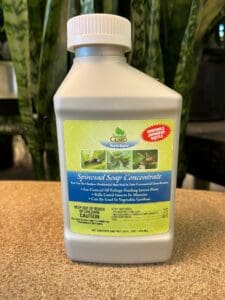
Spinosad soap can also provide good control of lace bugs and other soft-bodied insects. It is a combination of Spinosad and Insecticidal Soap.
As with any pesticide, always read the label carefully and apply the product only under the recommended environmental conditions.
Water Stressed Trees Attract More Insects
We consistently see heavier lace bug infestations on drought-stressed Texas Persimmon trees.
Deep, regular watering helps trees stay healthy and better withstand insect pressure during the intense Central Texas summer.
The Most Important Control Method: Clean Up!
If your tree has experienced insect or disease problems, clean up fallen leaves immediately.
This simple practice removes overwintering insects and disease organisms before they can return next season.
Follow these cleanup steps:
Rake up all fallen leaves.
Bag them while collecting them.
Dispose of them with household waste.
Do not compost infected leaves.
Good sanitation is one of the easiest and most effective ways to reduce future lace bug infestations.
Healthy trees begin with good cultural practices—and that starts with clean up, clean up, clean up!



Leave A Comment