TIPS FOR YOUR
GARDEN & LANDSCAPE

Bacterial Wetwood and Alcoholic Flux

    Many times, the first time you see a tree “leaking” will be when insects such as Green June Beetles or Hackberry Butterflies are attracted to the fluid seeping out of the trunk and draw your attention to it.       Bacterial Wetwood, also known as Slime Flux, is a bacterial disease that can affect a variety of tree species, such as oak, elm, mesquite, maples, and others. Bacterial Wetwood occurs when bacteria infect the wood of a tree, usually through a wound in the trunk, limb, or [...]

By |2025-01-20T11:35:20-06:00July 28th, 2020|Trees, Insects, Disease|

Sapsucker Damage to Trees

What causes horizontal lines of hole in trees? Have you seen a horizontal line of small holes on the trunk of your tree? Your tree may have been visited by a Yellow bellied Sapsucker. Sapsuckers overwinter in Central America and Southern North America, and summer in Canada and the Northern United States. Most tree damage here occurs during migration in April/May and September/October. What damage do Sapsucker Woodpeckers do to trees? The Sapsucker feeds on sap obtained by drilling shallow holes in a ring around a tree. Many times the [...]

By |2024-12-16T13:54:42-06:00July 22nd, 2020|Trees|

Houseplant Care 101

Once you have chosen a houseplant which is appropriate for the light conditions in your location, the single most important aspect of their care is knowing how to water correctly.  When at all possible, double potting (setting a nursery pot inside a decorative pot) is the most effective method of potting. As long as the nursery pot is manageable, it can be moved outside or to a sink or bathtub to water the plant. It is very important to be able to water the plant in a location where the [...]

By |2020-12-02T08:28:57-06:00July 8th, 2020|Houseplants|

Watering Established Trees in the Landscape

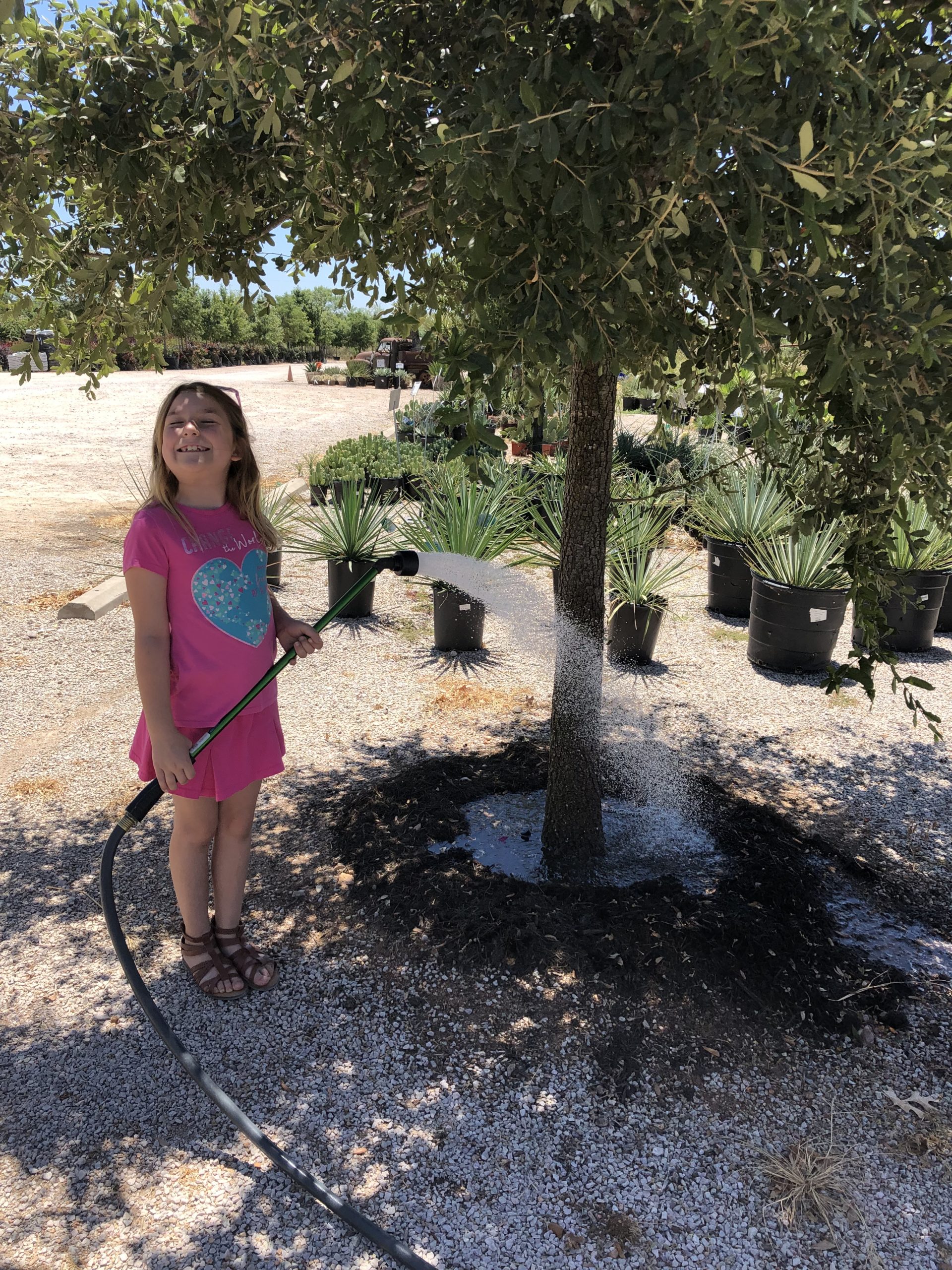
Watering established trees in the landscape is not as intuitive as you might think. Learning where roots grow will help you to understand the type of watering your trees need to be healthy and to grow to your expectations. Hopefully you have followed our watering guidelines to establish your tree in the landscape for the FIRST YEAR . Now it is time to talk about how to encourage the root system to spread out and grow to its full potential in SUBSEQUENT YEARS. I have talked to many people who [...]

By |2026-05-13T15:30:35-05:00June 29th, 2020|Trees, Plants|

Deer Resistant Plant List

I provide this list with a special warning: DEER DON'T READ!  Please use this list wisely. Deer will sample anything new, and the fresh growth in the spring often does not contain the concentration of volatile oils or scents that would normally repel deer from browsing.     I always recommend using a good deer repellent such as Deer Out for the first few weeks after planting even a "reliably" deer resistant plant. It certainly can't hurt and might help avoid finding your plant pulled out of the ground and [...]

By |2022-04-18T12:38:15-05:00June 9th, 2020|Plants|

Tillandsia Care

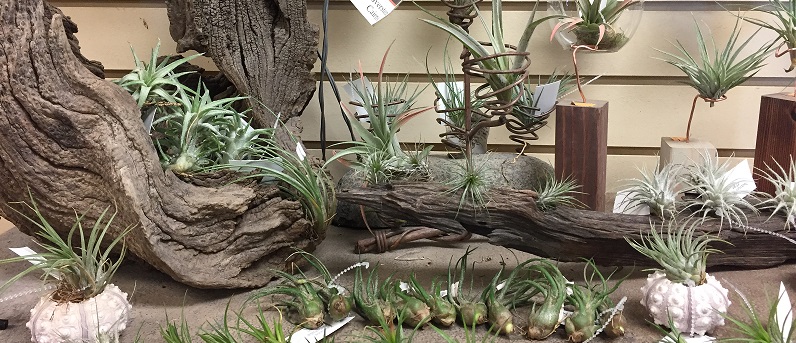
Air Plant (Tillandsia) Care Air plants, or Tillandsias, are Bromeliads in the pineapple family. They are classified as epiphytes, meaning they attach themselves to trees for support, taking nothing from and giving nothing to the tree. Their leaves, rather than their roots, absorb water and nutrients through tiny scales called trichomes. They really are quite easy to care for, but it helps to know what their requirements are if you want them to thrive. Light: Lighting should be quite bright but not direct sun. Keeping them within 3’of an east, [...]

By |2023-02-28T08:35:34-06:00May 23rd, 2020|Houseplants|

Staghorn Fern Care

Staghorn Fern Care         *Staghorn ferns (Platycerium bifurcatum) are epiphytes which grow in tree tops in Australia, Madagascar, Phillipines, Africa, Southeast Asia and America. There are many species of Staghorn ferns, each requiring different growing conditions. The Platycerium bufurcatum is the most common species in cultivation due to their ease of care.           *Staghorn ferns have both sterile fronds and fertile fronds. The sterile fronds are the disc shaped fronds that serve to attach the plant to a tree, capturing rainwater and debris [...]

By |2023-02-28T08:35:42-06:00May 13th, 2020|Houseplants|

Desert Rose

Desert Rose Adenium obesum             Like Oleanders, Adenium is a member of the Dogbane family (Apocynaceae) They are native to the deserts of South and East Africa and the Arabian Peninsula.  Since they are considered to be a tropical plant in Central Texas, the plants should be grown in pots so that they can be brought indoors in cool weather.             Young plants should be grown in filtered sunlight, outdoors, in pots under a sparsely branched tree, or at the edge of a canopy of a more densely branched tree. [...]

By |2025-06-18T13:24:18-05:00May 13th, 2020|Succulents and Cacti, Houseplants|

Establishing Trees in the Landscape-the first year

Establishing a tree in Central Texas is a labor of love. Given proper care your tree will thrive for many years to come. Please remember that rain and irrigation are not adequate for establishing newly planted trees. It can take up to one year for each inch of  trunk caliper to fully establish a tree. Missing just one day of watering, especially on a hot or windy day, can mean root death for the tree from which it may not recover. Keep up the good work and you will be [...]

By |2026-07-25T14:21:50-05:00April 29th, 2020|Trees|

Fire Blight on Pear Trees

For the third year in a row, Bradford Pears have been blooming during a rain event! Why does that matter, you ask? Because a very bad guy, a bacterium called Erwinia amylovora, or Fire Blight, enters the plant through the flower via splashing water. What are the symptoms of Fire Blight? The first symptom to appear, shortly after bloom, is a blossom blight. The flower will appear water-soaked, then turn black. The most obvious symptom of this disease is the shoot blight phase, in which the tip of the shoot [...]

By |2025-04-23T15:26:16-05:00April 22nd, 2020|Trees, Fruit & Nuts, Disease|

Growing Periwinkle in Central Texas

Anyone who has planted Periwinkle, or Annual Vinca, in the spring in Central Texas will tell you “that plant always dies when I plant it”. Well, there is a reason for that! Periwinkle, especially in the “old” days, before resistant varieties were available, was never grown until the cool wet weather of spring was behind us. It absolutely thrives in the scorching hot summers, but give it rain and cool weather, and disease takes over!                 Phytophthora fungus is the causal organism for [...]

By |2021-06-02T16:10:29-05:00April 4th, 2020|Plants, Disease|

Anacacho Orchid Tree

After the Mexican Plums, Texas Mountain Laurels and Redbuds have finished blooming, the Anacacho Orchid tree graces us with its pure white blooms, which can last almost a month. I am particularly fond of this Texas native, as it is very versatile in the landscape. Tolerating both full sun as well as part shade in an understory location, it is also quite tolerant of thin limestone soils. Good drainage is one of its few requirements. The Anacacho Orchid is native to three counties in south Texas and northeastern Mexico, including [...]

By |2020-03-10T10:37:11-05:00March 10th, 2020|Trees|
Go to Top