My New Tree is Crispy!

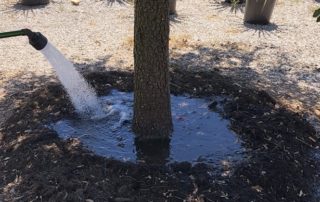
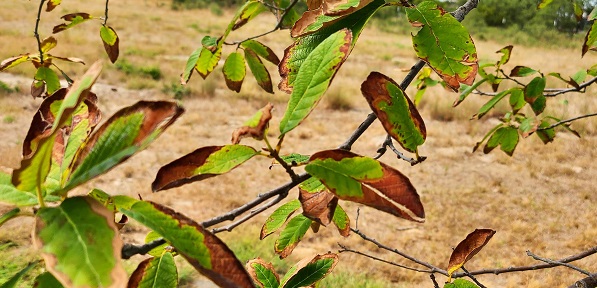
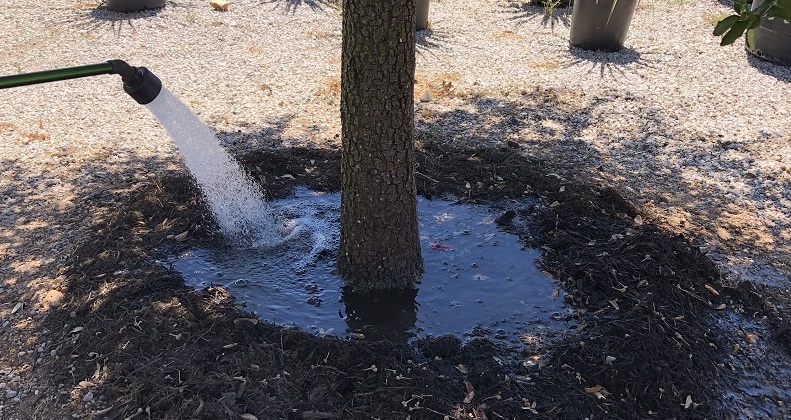
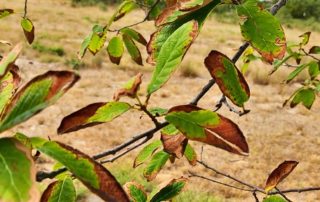
Establishing trees in the summer comes with its own set of challenges. Trees CAN be established in the summer, but it is necessary to understand the importance of consistent watering. I have always preferred hand-watering to any form of irrigation, as it requires a “hands on” approach and leaves nothing to chance. The tree that you bring home has a root system, in a pot, that has been providing water and nutrients for the entire canopy of that tree while being grown in the nursery setting. When you plant the [...]
By |2022-06-29T10:55:17-05:00June 28th, 2022|Trees|

Lichens on Tree Bark

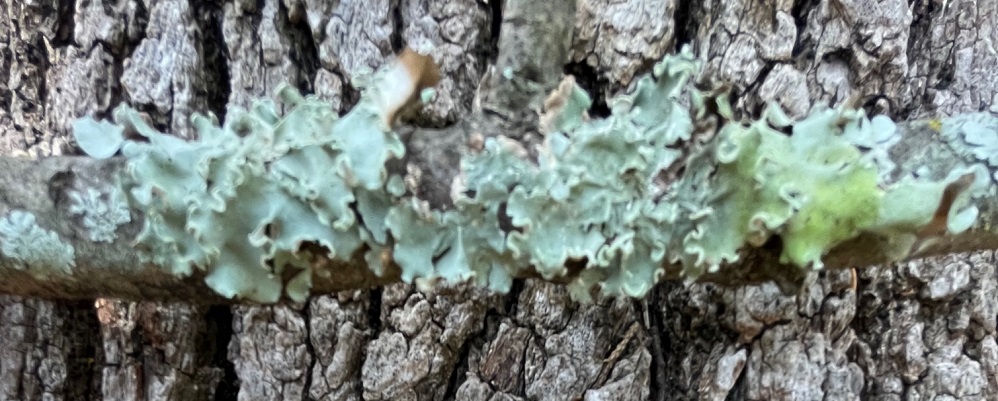
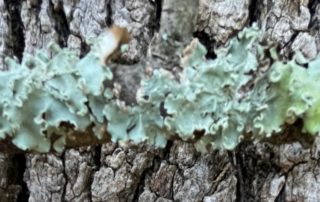
  Have you ever wondered what those colorful crusty growths on tree trunks are? You’ll be happy to know that they are not usually harmful, but simply a relationship between three separate species that are mutually helpful to one another. The fungal part of this relationship cannot survive without the availability of photosynthetic products from the other two species, green algae and cyanobacteria.       Lichens grow on trees, shrubs, soil, and rocks and provide additional moisture and protection to whatever they grow on. If a tree or shrub [...]

By |2022-04-07T15:05:29-05:00April 5th, 2022|Trees, Plants|

Why Do Live Oaks Look So Bad This Spring?

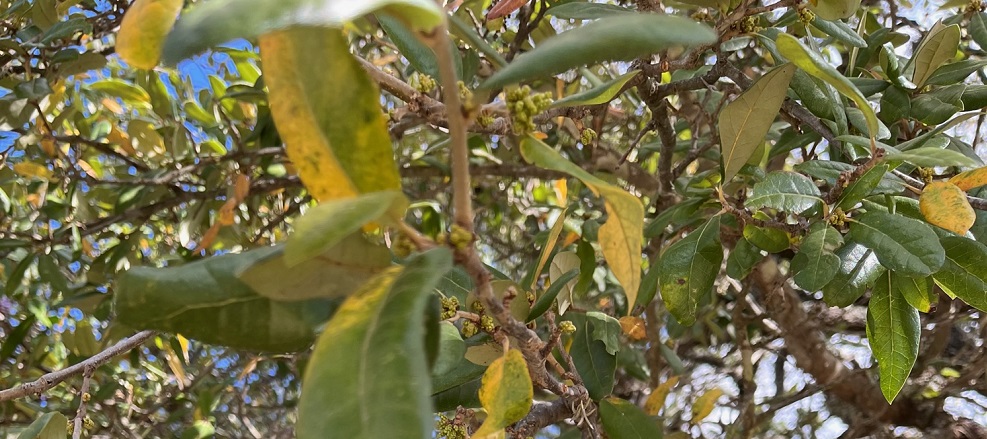
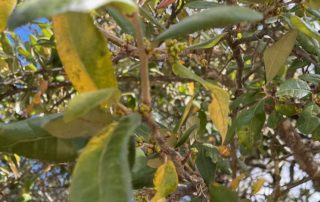
Every spring we get the same question from new residents who may have moved here from other states. Here is a recent query:     Question:  We have noticed that a lot of the old established Live Oaks are looking very bad this spring. Yellow leaves that are all falling off. Is this something we should be concerned with? Should we be watering them?         Answer:  Live Oaks are not true evergreens. They will actually shed leaves year-round, but the main shed is in the spring-as in [...]

By |2023-02-28T08:31:10-06:00March 29th, 2022|Trees|

Tree Care and Maintenance

Tree Care and Maintenance Watering: -Water your tree religiously for at least one year using the following guidelines, and subsequent years during the hottest months or if we experience high heat or drought conditions. It can take approximately 1 year per inch caliper of the tree for the tree to fully establish. Careful monitoring of watering during this time will ensure a healthy tree.  -At the time of planting the tree needs to be deeply watered. Two days after planting the tree needs to be deeply watered again.  You can [...]

By |2023-02-28T08:32:12-06:00January 5th, 2022|Trees|

Ganoderma Butt Rot

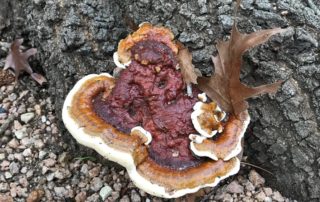
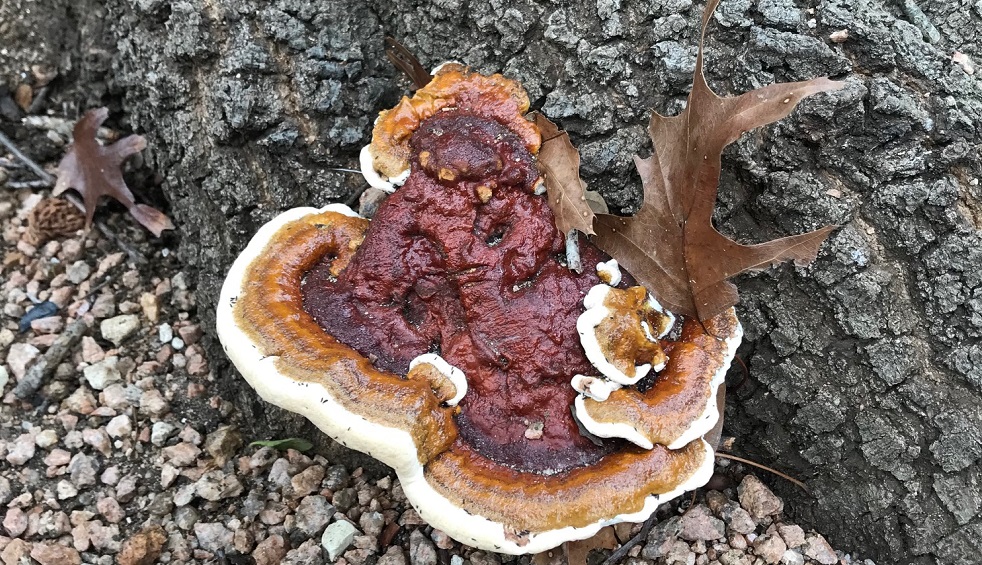
The presence of a “fruiting body”, or conk, at the base of a tree or palm is a sign that the tree may be infected by a species of fungus called Ganoderma. There are several species of this fungus that affect different hosts. This one is Ganoderma sessile, and it affects oaks, maples, honeylocusts and other hardwoods. The conks appear annually in summer and fall at the base of the tree or on a lateral root close to the trunk. The fungus enters through wounds in the trunk commonly made [...]

By |2023-02-28T08:32:25-06:00January 4th, 2022|Trees, Disease|

Redbuds-Harbingers of Spring

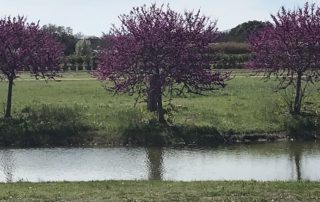
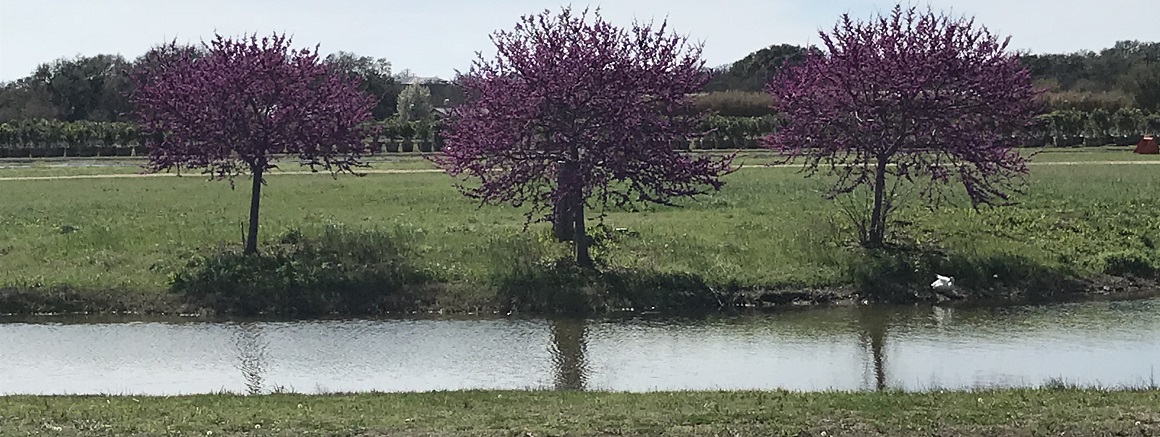
Redbuds are an excellent indicator of warmer days ahead. From the bean-like seed pods, we can tell that they are in the Legume (or bean) family. Their flowers come in a range of shades of deep rose, pink, purple and white, as well as a range of forms such as single trunk, multi-trunk and weeping. Although we often see the native Redbuds growing and blooming in full sun, they also do quite well as an understory tree, tolerating partial shade very  well. To avoid the ever-present “leaf-scorch” in late summer, [...]

By |2022-03-13T10:16:36-05:00September 15th, 2021|Trees|

Rose of Sharon

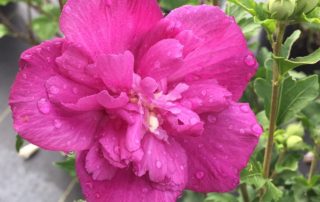
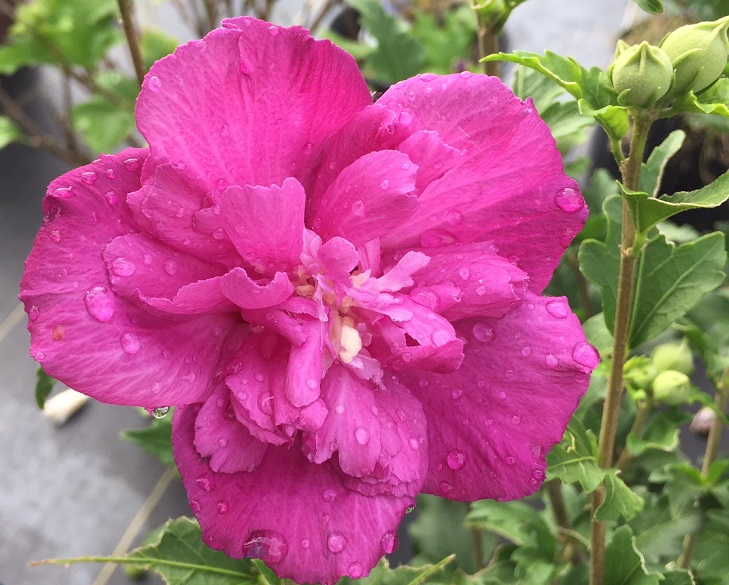
Rose of Sharon (aka Althea) Hibiscus syriacus Native to China and India, Rose of Sharon was introduced to the gardens of Europe in the 16th century. The specific epithet “syriacus”, refers to it having been collected from gardens in Syria. It is propagated by seed and cuttings, and many new cultivars have shown up in recent years. Many of these cultivars produce little to no seed. Rose of Sharon is a deciduous, multi-trunk woody shrub to small tree that is cold hardy to Zone 5b (-15°F). It tolerates heat, poor [...]

By |2021-08-21T13:44:43-05:00August 21st, 2021|Plants, Trees|

Crape Myrtle Bark Scale

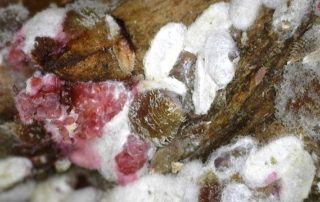
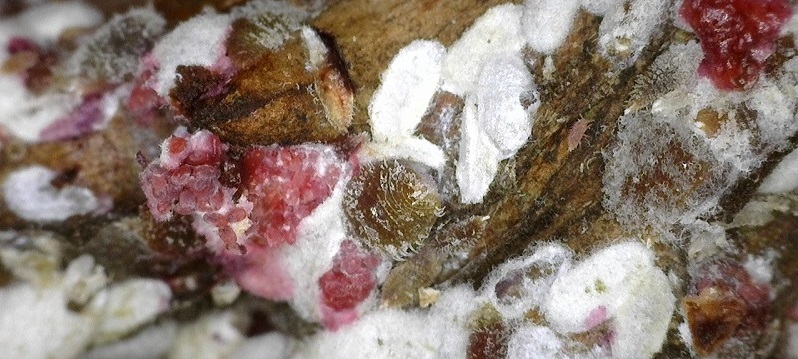
Crape Myrtle Bark Scale What are the signs of Crape Myrtle Bark Scale? When customers contact us about black, sooty mold appearing on crape myrtle leaves, trunks, or even on plants growing beneath the tree, we start by investigating the most common causes. First, we check for aphids. Next, we look closely for crape myrtle bark scale, an increasingly common pest of crape myrtles. Crape myrtle bark scale is an introduced insect from China, Japan, and Korea. While it is still less common than aphids, we have seen a steady [...]

By |2026-02-02T13:35:46-06:00August 10th, 2021|Trees, Insects|

Borers in Shade Trees

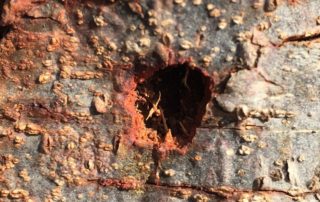
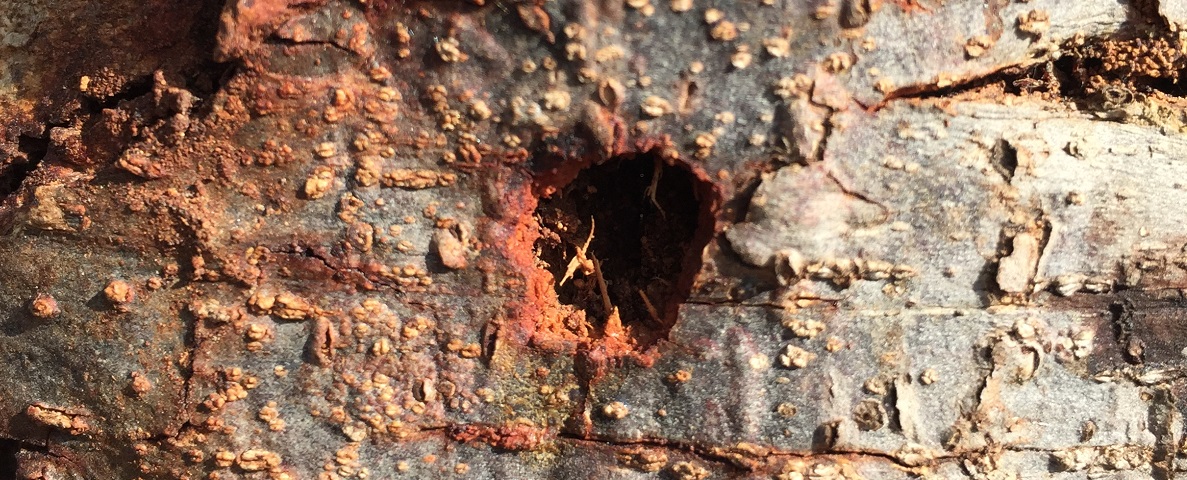
One of the most frequent questions we get at the nursery is about borer holes in tree trunks. Unfortunately, almost everyone wants to know how to “treat” for the borers, not realizing that the presence of borers is just an indication of a larger problem. Wood boring insects include the larvae of various beetles, moths and even a wood boring wasp. Most of these insects lay their eggs on the bark and the hatching larva chew their way into the plant to feed. Most wood boring insects cannot successfully attack [...]

By |2023-10-23T14:14:57-05:00July 7th, 2021|Trees, Insects|

Gummosis in Fruit Trees

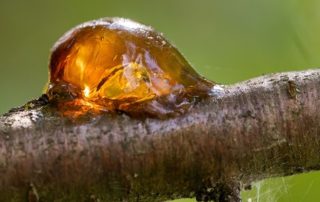
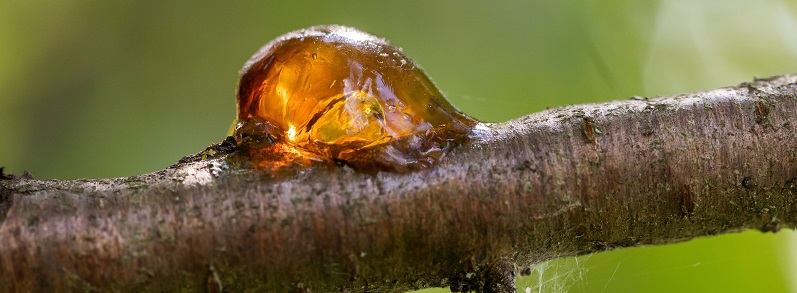
Gummosis is a term that refers to the presence of  amber-colored sap oozing from the trunk or branches of a tree. It is important to understand that the term “gummosis” is a symptom, not a cause of a tree ailment. Anything that stresses the tree can be a causal factor. It is necessary to determine the cause of the stress in order to mitigate future damage to the tree. Gummosis has a variety of causes: Environmental stress: Compacted soils, poorly drained soils, light sandy soils, use of weed and feed [...]

By |2022-01-15T12:09:08-06:00July 7th, 2021|Trees, Plants, Insects, Fruit & Nuts, Disease|

Watering Guidelines for New Plants

First of all, I’d like you to know that this is a difficult subject to write about. There is no “one size fits all” for watering newly planted trees, shrubs and perennials. Soils are different, climatic conditions are variable, and plants are different in their water needs and the rate at which they establish. That being said, I will attempt to give you some “guidelines”.  I am sure that you will need to adjust them to your own set of conditions. Trees *Newly planted trees will require from 1-5 years [...]

By |2025-06-11T10:29:21-05:00June 23rd, 2021|Plants, Trees|
Go to Top