

Beneficial Nematodes: Natural Pest Control for Lawns and Gardens
Beneficial nematodes are microscopic, whitish-to-transparent, unsegmented worms. Thousands of nematode species exist, and each species has its own feeding preferences.
Certain beneficial nematodes actively search for insect pests, including insect pupae and larvae, in consistently moist soil. They can target more than 250 species of insects, including:
- White grubs
- Termites
- Peach tree borers
- Fire ants
- Stink bugs
- Fleas
- Chinch bugs
- Field crickets
- Flea beetles
How Do Beneficial Nematodes Control Insect Pests?
Beneficial nematodes provide a natural way to control many lawn and garden pests. Instead of relying solely on chemical insecticides, you can use these microscopic organisms to target insects living in the soil.
Nematodes actively seek out susceptible insect hosts. Once they locate and enter a host, they kill the insect and reproduce inside it. The new generation then leaves the host and searches for additional insects.
This natural life cycle allows beneficial nematodes to continue working against soil-dwelling pests.
Double-Death Beneficial Nematodes
Backbone Valley Nursery sells and recommends “Double-Death” beneficial nematodes, specially developed sub-strains designed to improve performance compared with older strains.
Under ideal conditions, Double-Death nematodes can survive for more than 90 days without a host insect. Once they find a suitable host, they enter the insect, kill it, reproduce, and release offspring that continue searching for additional hosts.
When Should You Apply Beneficial Nematodes?
For the best results, apply beneficial nematodes when the soil is moist and you can keep it moist for several days.
Before application, irrigate the treatment area. The soil should be moist but not soggy.
Beneficial nematodes work best when soil temperatures remain between 50°F and 85°F.
How to Apply Beneficial Nematodes
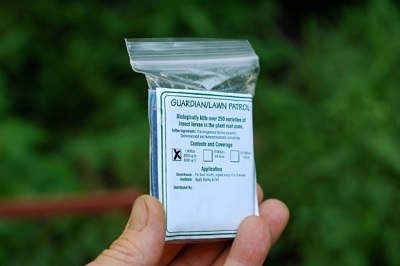
Follow these steps when applying Guardian/Lawn Patrol Nematodes:
- Moisten the soil. Irrigate the area before applying the nematodes. Keep the soil moist, but avoid creating soggy conditions.
- Prepare the nematode solution. Mix the nematodes with cool water. Distilled water is preferred.
- Fill a sprayer. Pour the nematode solution into a suitable sprayer and apply it directly to the treatment area.
- Apply in the evening. Evening applications work best because temperatures are cooler and the nematodes are not exposed to direct sunlight.
- Water the nematodes into the soil. Irrigate after application to help move the nematodes into the soil where target insects live.
- Keep the soil moist. Continue irrigating several times to maintain moisture for approximately two weeks while the nematodes work.
How to Tell if Beneficial Nematodes Are Working
You can check the treated area about a week after application to look for signs of parasitized grubs.
Infected grub larvae or pupae may appear red or yellow-brown.
For additional pest control, apply a second treatment of Guardian/Lawn Patrol Nematodes approximately two weeks after the first application.
Maintain adequate soil moisture for at least two weeks after each application. Proper moisture is essential because beneficial nematodes need a moist environment to move through the soil and locate their insect hosts.
How Much Area Does One Package Treat?
One package containing one million nematodes treats up to 3,000 square feet.
For the best results, follow the application instructions carefully and maintain adequate soil moisture throughout the treatment period.
A Natural Approach to Lawn and Garden Pest Control
Beneficial nematodes offer gardeners and homeowners a biological approach to managing many soil-dwelling insect pests. When applied under the right conditions and kept adequately moist, these microscopic organisms can actively search for and control susceptible insect larvae and pupae.



We used Nematodes last year and were happy with the results…and because the grubs were gone, so we’re the armadillo!!!
My question is… we plan to use Scott’s weed and feed the first week of May. Will the nematodes be best used before or after the Scott’s application???
I am glad that you got good results from the nematodes. However, we NEVER advocate the use of a post-emergent weed and feed product, especially one with a 30% nitrogen content! It will weaken turf and predispose it to Take All Patch fungus. The post-emergent broadleaf herbicide is damaging to tree roots which are growing beneath your lawn. It is better to encourage a healthy lawn that will choke out weeds through proper watering, mowing and fertilization with MicroLife organic fertilizer. Chemicals can harm earthworms and other beneficial in the soil and should be avoided. Please consult our lawn blogs to learn more.