Cotton Root Rot in Texas Shade Trees: What Homeowners Need to Know
If a healthy-looking shade tree suddenly wilts and turns brown during a hot Texas summer, cotton root rot should be on your list of possible causes.
Also called Texas root rot or Phymatotrichum root rot, cotton root rot is caused by the soilborne fungus Phymatotrichopsis omnivora. It occurs across much of Texas and can attack thousands of broadleaf plants, including many popular landscape trees. (Plant Disease Handbook)
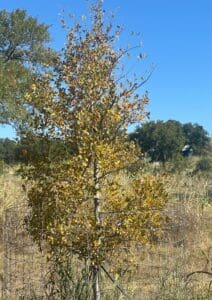
The disease can be especially frustrating because its symptoms can look a lot like drought stress.
What Does Cotton Root Rot Look Like?
Cotton root rot usually becomes active during the hottest part of the growing season. In Texas, symptoms commonly appear from June through September, when soil temperatures reach about 82°F.
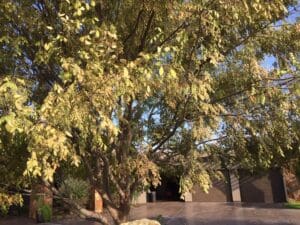 Early symptoms may include:
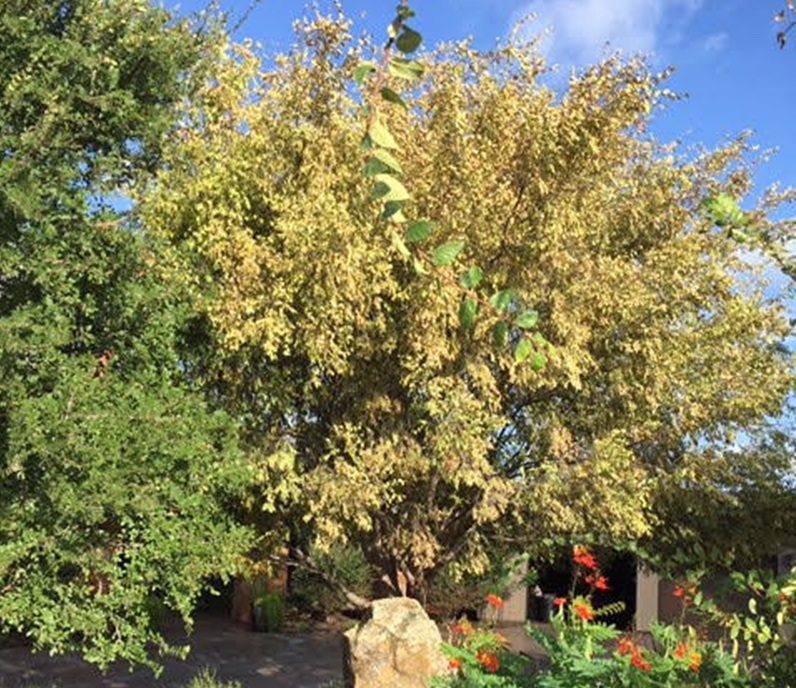
- Leaves turning yellow, bronze, or dull green
- Sudden wilting
- Rapid browning of the foliage
- Leaves that remain attached after the tree dies
- Rapid decline of individual branches or the entire tree
- Reduced growth and thinning foliage in trees with a slower disease progression
Young plants can die quickly. Larger, established trees may decline more gradually.
One of the most important clues is dead brown foliage that remains attached to the branches. (Plant Disease Handbook)
What Happens Below the Soil?
Cotton root rot attacks the roots. By the time the leaves wilt, extensive root damage may already have occurred.
If you carefully examine affected roots, you may find:
- Brown, decayed root tissue
- A loose or rotted root system
- Fine tan, bronze, or brown fungal strands on the root surface
After warm rain or irrigation, the fungus can sometimes produce a white-to-tan fungal mat on the soil surface near an infected plant. These mats are a useful clue, but they do not appear every time. (Plant Disease Handbook)
A positive diagnosis requires looking at the roots and, when necessary, submitting samples to a qualified plant diagnostician.
Why Is Cotton Root Rot Common in Texas?
The fungus favors conditions common in many Texas landscapes:
- Warm soil
- High summer temperatures
- Alkaline soils
- Calcareous soils
- Clay or clay-loam soils
Texas Plant Disease Handbook information identifies soils with a pH around 7.0 to 8.5 as particularly favorable. The fungus can survive in soil for many years. (Plant Disease Handbook)
That makes Central Texas landscapes particularly important to watch, especially where alkaline, calcareous soils occur.
How Does Cotton Root Rot Spread?
Cotton root rot is primarily a soilborne disease. The fungus survives in the soil as long-lived structures and gradually grows through the soil to reach susceptible roots.
You may notice a pattern in the landscape. Several susceptible trees or shrubs may decline in a roughly circular area because the fungus can move from one root system toward another.
The disease can also move when infected plants or contaminated soil are transported to a new location. (Plant Disease Handbook)
This is one reason I recommend keeping track of areas where cotton root rot has occurred before planting another susceptible tree.
Which Shade Trees Are Most at Risk?
Cotton root rot has an unusually broad host range. Texas A&M reports that the pathogen can affect more than 1,800 dicotyledonous plants. (Texas A&M AgriLife Extension Service)
Among landscape plants, some trees are much more problematic than others.
Trees that can be susceptible include:
- Chinese or lacebark elm
- Red mulberry
- Fruitless mulberry
- Cottonwood and poplar
- Willow
- Catalpa
- Silver maple
- Boxelder
- Chinaberry
- Ornamental plums
- Some ash species
- Pecan
- Various ornamental and fruit trees
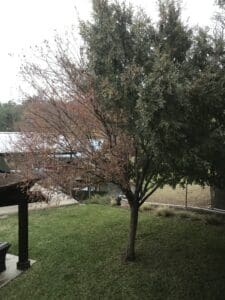
Lacebark elm deserves particular caution. Texas plant pathology resources and Texas arboriculture reports identify it as highly susceptible to cotton root rot. (Texas Plant Disease Diagnostic Lab)
Susceptibility varies by species, cultivar, site, and disease conditions, so a tree’s presence on a susceptible list does not mean it will definitely become infected.
Cotton Root Rot or Drought Stress?
This is one of the most important questions for Texas homeowners.
Both problems can cause a tree to wilt, turn brown, and lose vigor. The timing and progression of the symptoms can provide clues.
| Symptom | Drought Stress | Cotton Root Rot |
|---|---|---|
| Soil moisture | Often very dry | May be dry, moist, or recently irrigated |
| Onset | Usually gradual | Can be surprisingly rapid |
| Leaf color | Often dull, yellow, brown, or scorched | Yellow/bronze followed by rapid wilt and browning |
| Dead leaves | May drop from the tree | Often remain firmly attached |
| Root condition | Dry or stressed but generally intact | Brown, decayed roots |
| Fungal growth on roots | No | Tan/brown fungal strands may be present |
| Pattern | Can affect broad areas based on irrigation and soil | May occur in roughly circular areas |
| Recovery after watering | May improve if roots remain healthy | Infected trees generally continue to decline |
A Key Warning Sign
If a tree wilts severely despite adequate soil moisture, don’t automatically assume it needs more water.
Excessive irrigation will not cure a root disease, and constantly wetting an already damaged root system can create additional problems.
Instead, inspect the root zone and look for other evidence of root damage.
Texas A&M notes that root rots can be difficult to diagnose because several problems can produce similar above-ground symptoms. (Texas A&M AgriLife Extension Service)
Is There a Treatment for Cotton Root Rot in Shade Trees?
Unfortunately, there is no dependable curative treatment for an established cotton root rot infection in a landscape tree.
Management focuses primarily on prevention and plant selection.
1. Confirm the Diagnosis
Don’t remove a valuable shade tree based only on wilted leaves.
Cotton root rot can resemble drought, other root rots, vascular diseases, and serious root damage from construction or girdling roots.
A professional diagnosis can save you from treating the wrong problem. Contact a local Certified Arborist for confirmation.
2. Don’t Overwater
Maintain appropriate soil moisture, but don’t try to “water away” suspected cotton root rot.
Good irrigation practices reduce drought stress and help maintain overall tree health, but they will not eliminate the pathogen.
3. Consider Resistant Trees When Replanting
If cotton root rot is confirmed at a site, plant selection becomes one of your best long-term management tools.
Research and Extension resources identify several trees and woody plants with resistance or tolerance to cotton root rot.
4. Be Careful With Soil Amendments
You may encounter recommendations to add sulfur or organic matter to change soil conditions.
These practices may influence disease development under some circumstances, but they should not be viewed as a cure for an infected tree. Soil amendments also need to be appropriate for the particular soil and planting site.
For landscape trees, resistant plant selection remains the more practical long-term strategy. (Plant Disease Handbook)
Resistant Shade Trees for Texas
No tree is perfect for every Central Texas site, but several trees are identified as resistant or relatively resistant to cotton root rot.
The University of Utah Extension’s current cotton root rot resource lists these resistant trees and woody plants:
- Hackberry (Celtis spp.)
- Cedar Elm (Ulmus crassifolia)
- Desert willow (Chilopsis linearis)
- Cypress and juniper (Cupressus spp.)
- Palo verde (Parkinsonia spp.)
- Mesquite (Prosopis spp.)
- Mediterranean fan palm
- Windmill palm
- California fan palm
- Yucca
The same source notes that monocots, including palms and yuccas, are generally immune to the disease. (Utah State University Extension)
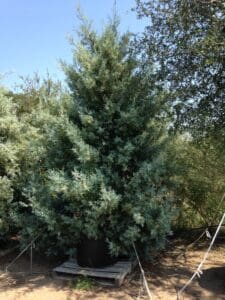
For Central Texas homeowners, hackberry, cedar elm, desert willow, mesquite, juniper/cypress, and certain palms can therefore be useful options when site conditions and landscape goals allow.
Always select a tree based on the entire planting site—not just disease resistance. Consider mature size, available soil volume, soil type, drainage, sunlight, utility conflicts, freeze tolerance, and irrigation needs.
University of Utah Extension: Cotton Root Rot and Resistant Plants
What Should You Do If You Suspect Cotton Root Rot?
If a shade tree suddenly declines during hot weather, take a closer look before reaching for the hose or fertilizer.
Check:
- How quickly did the symptoms develop?
- Does the soil actually contain adequate moisture?
- Are the leaves still attached?
- Are other susceptible plants nearby declining?
- Does the tree have a history of root disturbance or construction damage?
- What do the roots look like?
- Is there fungal growth or a fungal mat near the tree?
If the evidence points toward cotton root rot, get the diagnosis confirmed before removing the tree or planting a replacement.
The Bottom Line
Cotton root rot is one of the most challenging soilborne diseases Texas gardeners face. It thrives in hot, alkaline soils, attacks a remarkably wide range of broadleaf plants, and can kill susceptible trees rapidly once symptoms appear. (Plant Disease Handbook)
The good news is that homeowners can reduce future problems by choosing resistant trees and avoiding susceptible species in known problem areas.
When planting a new shade tree in Central Texas, the right tree in the right soil can be one of your best defenses against cotton root rot.
Learn More From Texas Universities
For additional information and diagnostic guidance, these university resources are worth bookmarking:
- Texas A&M AgriLife Extension — Cotton Root Rot and Its Management
- Texas Plant Disease Handbook — Cotton Root Rot
- Texas A&M Plant Disease Diagnostic Laboratory
- University of Utah Extension — Cotton Root Rot
If you suspect cotton root rot in a valuable shade tree, have the problem diagnosed before deciding whether to remove the tree.
A useful WordPress focus keyphrase would be “cotton root rot in Texas shade trees.” Secondary phrases include “Texas root rot,” “cotton root rot symptoms,” “cotton root rot treatment,” “resistant trees for cotton root rot,” and “cotton root rot Central Texas.” (Plant Disease Handbook)
One important editorial note: I deliberately avoided presenting sulfur, fungicides, or other chemical treatments as a reliable cure for infected shade trees. Texas A&M’s current disease information emphasizes the difficulty of controlling this pathogen, while the most current Extension resource I found recommends resistant plants as the effective landscape strategy. (Plant Disease Handbook)