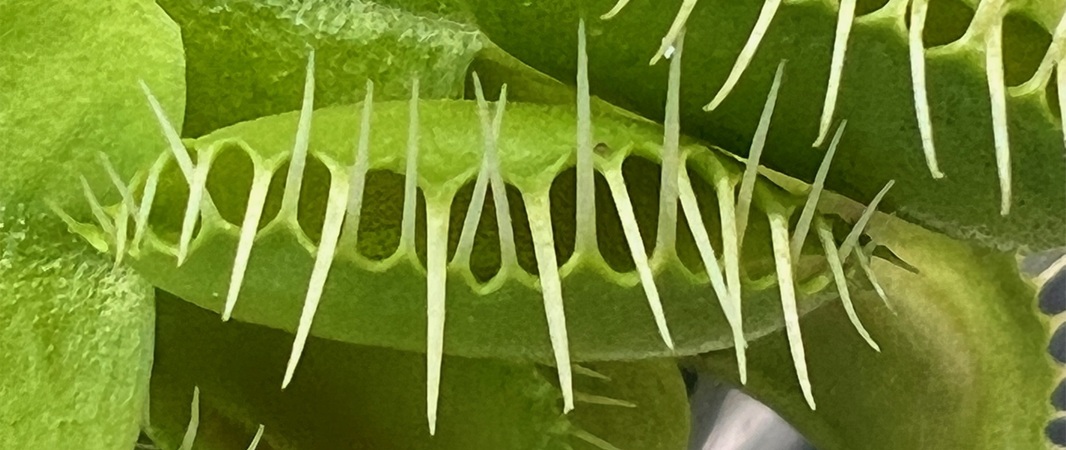
As a horticulturist here in Central Texas, I get a lot of questions about the fascinating Venus flytrap (Dionaea muscipula). While they look exotic, they can absolutely be grown successfully here — with the right care. The key is understanding that they are not typical houseplants.
Here’s how to keep your Venus flytrap thriving in our hot, dry climate.
☀️ Light: Full Sun Is Essential
Venus flytraps are not low-light terrarium plants.
-
Provide 6+ hours of direct sun daily
-
Morning sun and bright afternoon light are ideal
-
In Central Texas summers, light afternoon shade (after 3–4 PM) can help prevent overheating in extreme heat
If grown indoors, place them in your sunniest south-facing window, though they generally perform better outdoors.
💧 Water: Only Rainwater, Distilled, or Reverse Osmosis
This is where most folks go wrong.
Our Central Texas tap water is typically too high in minerals and salts, which will damage or kill your plant over time.
Use only:
-
Rainwater
-
Distilled water
-
Reverse osmosis (RO) water
Keep the pot sitting in a shallow tray with about ½–1 inch of water during the growing season. Never let them dry out.
🌱 Soil: No Potting Mix!
Venus flytraps require nutrient-poor, acidic soil.
Use:
-
50/50 peat moss and perlite
or -
Long-fiber sphagnum moss
Do not use regular potting soil, compost, or fertilizer — they will burn the roots.
🔥 Heat Considerations in Central Texas
Summer temperatures here routinely exceed 100°F. Venus flytraps can handle heat if:
-
They have consistent moisture
-
The roots stay cool (use light-colored plastic pots)
-
They get some protection from brutal late-afternoon sun during extreme heat waves
Avoid small decorative terrariums outdoors — they can overheat quickly.
🐜 Feeding: Let Them Catch Their Own Food
If grown outdoors, they’ll catch plenty of insects on their own.
If indoors:
-
Feed a small live insect (like a tiny cricket) occasionally
-
Never feed hamburger or human food
-
Don’t trigger traps for fun — each trap only closes a limited number of times
No fertilizer needed — ever.
❄️ Winter Dormancy (Very Important!)
Venus flytraps are native to the Carolinas and require a winter dormancy period.
In Central Texas:
-
Dormancy typically begins in late fall
-
Growth slows and traps may turn black (this is normal)
-
Reduce watering but do not let the soil dry out
-
They tolerate light freezes but should be protected if temps drop below 25°F for extended periods
You can move them to an unheated garage or protected area during hard freezes.
Dormancy lasts about 3–4 months and is essential for long-term health.
🚫 Common Mistakes I See at the Garden Center
-
Watering with tap water
-
Growing in regular potting soil
-
Keeping them indoors in low light
-
Skipping winter dormancy
-
Constantly triggering the traps
Final Thoughts
Venus flytraps (Dionaea muscipula) are incredibly rewarding plants when grown correctly. In Central Texas, success comes down to sun, pure water, proper soil, and respecting dormancy.
Treat them less like a houseplant and more like a specialized outdoor perennial, and you’ll enjoy those snapping traps for years to come.
If you’re ever unsure, bring your plant by the garden center — we’re happy to take a look! 🌿