
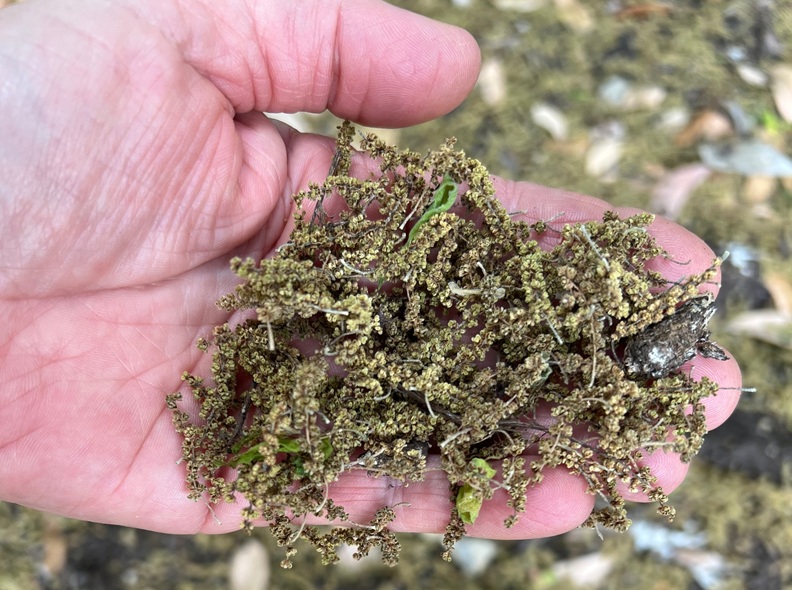
Every spring in Central Texas, oak trees put on their dusty yellow show—and most folks see oak pollen as nothing but a nuisance. Cars turn chartreuse, allergies flare, and patio furniture looks like it’s been rolled in cornmeal. But in a garden, oak pollen is far from useless. In fact, it plays several quiet but meaningful roles in a healthy landscape.
A Natural Nutrient Booster
Oak pollen is essentially plant protein and micronutrients in powder form. When it settles onto soil, mulch, or lawn, it begins to break down quickly with moisture. This adds trace nutrients and organic matter back into the soil—think of it as a very fine, fast-acting compost. While it’s not a substitute for a full fertility program, it contributes to long-term soil health, especially in native and low-input landscapes.
Feeding the Microbial Life
Healthy soil in Central Texas depends heavily on microbial activity. Oak pollen provides an early-season food source for beneficial bacteria and fungi. These microbes help cycle nutrients, improve soil structure, and support plant roots. After winter dormancy, that little dusting of pollen helps “wake up” the underground ecosystem just as plants begin active growth.
Supporting Pollinators (Indirectly)
While oak trees are wind-pollinated and don’t rely on bees, their pollen still enters the broader food web. Some insects will opportunistically collect or consume it, especially when other pollen sources are just getting started. More importantly, oaks themselves support hundreds of species of caterpillars and insects, which in turn feed birds—so that pollen is part of a much bigger ecological chain.
A Free Mulch Additive
When oak pollen accumulates in visible layers—on driveways, decks, or in corners—it can be swept up and added to compost piles or spread thinly in garden beds. Mixed with mulch, it breaks down quickly and helps retain a bit of moisture at the soil surface. Just don’t apply it thickly, as it can form a slight crust when wet.
Indicator of Seasonal Timing
In the Central Texas garden calendar, oak pollen is a signal. When you see it falling heavily, soil temperatures are warming, and it’s time to:
- Finish planting warm-season vegetables
- Fertilize lawns and perennials
- Expect a flush of weed germination (and stay ahead of it)
It’s nature’s way of saying: the growing season is here.
A Note on Caution
Of course, there’s a downside. In heavy amounts, oak pollen can temporarily coat leaves and reduce photosynthesis, especially on low-growing plants. A light rinse with water can help if buildup is thick. And for gardeners with allergies, working outdoors during peak pollen fall might require a mask or timing chores after a rain.
The Big Picture
In a Central Texas landscape, oak pollen is part of a larger natural cycle driven by native trees. Instead of fighting it, you can let it work quietly in your favor—feeding soil life, adding organic matter, and marking the rhythm of the season.
So next time everything turns yellow for a few weeks, remember: your garden is getting a free, if slightly messy, boost