
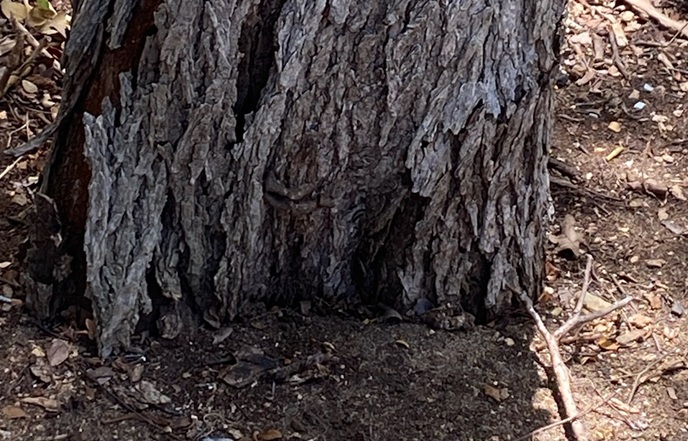
Is your tree planted too deep?
Why Planting a Tree Too Deep Is Harmful
Trees need oxygen just as much as they need water. The upper root system naturally grows close to the soil surface, where oxygen is most available. When you bury the root flare, you create conditions that can lead to long-term decline.
Trees planted too deeply may experience:
- Poor growth and reduced vigor
- Yellowing or thinning leaves
- Premature fall color or leaf drop
- Increased susceptibility to insects and diseases
- Trunk decay caused by constant soil and moisture against the bark
- Girdling roots that eventually choke the trunk
- Reduced lifespan
Many trees survive for years before symptoms become obvious. By the time homeowners notice declining branches or sparse foliage, the underlying problem has often been present since planting.
How Trees End Up Planted Too Deep
We frequently see two common planting mistakes:
1. Soil Is Added Around the Trunk
Sometimes fill dirt, mulch, or landscape changes raise the soil level around an established tree. Even a few inches of added soil can bury the root flare and create problems over time. Sod planted right up to the trunk can add at least an inch of soil.
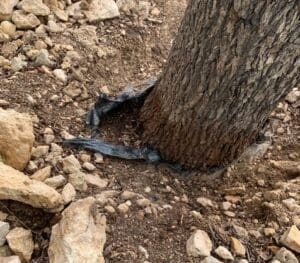

2. The Planting Hole Is Dug Too Deep
Another common mistake occurs during installation. The planting hole is dug deeper than the root ball, and soil is backfilled around the trunk. As the soil settles, the tree sinks below grade, burying the root flare.
A tree should sit on firm, undisturbed soil so it cannot settle after planting. This is why we recommend digging the hole the same depth as the original root ball or even an inch or so more shallow.


How to Tell if Your Tree Is Planted Too Deep
Take a close look where the trunk meets the soil.
Ask yourself:
- Can you see the trunk widen before it reaches the roots?
- Are the first major roots visible?
- Does the trunk disappear straight into the soil?
If the answer to the last question is yes, your tree may be planted too deep.
Fortunately, many trees can recover if the problem is identified early and corrected properly.
How to Correct Planting Depth
Depending on the severity, the solution may be as simple as carefully removing excess soil and mulch to expose the root flare. Trees that were installed too deeply may require more extensive root flare excavation.
Avoid piling mulch against the trunk. Instead, spread mulch in a broad ring around the tree while keeping it several inches away from the bark.
Watch This Step-by-Step Video
Not sure where to start? A Certified Arborist would be the first call for an established tree, as they can remove the excess soil with an “air spade” with little damage to the trunk or root system. However, sometimes this is not practical, and there are ways that homeowners can address the issue with some guidance.
Watch this video to learn how to identify the root flare and safely correct planting depth.
Is Your Tree Still Failing to Thrive?
If your tree continues to struggle, planting depth may not be the only issue. Watering practices, soil conditions, root damage, and nutrient deficiencies can also affect tree health.
Read our guide on diagnosing and treating trees that are failing to thrive to learn what to look for and how to restore your tree’s health.
Need Help?
If you’re unsure whether your tree was planted correctly, stop by our garden center with photos, or ask one of our plant experts for advice. Catching planting problems early can add years—even decades—to your tree’s life.
A healthy tree starts from the ground up, and exposing the root flare is one of the simplest ways to give your tree the best chance to thrive in the Central Texas landscape.