
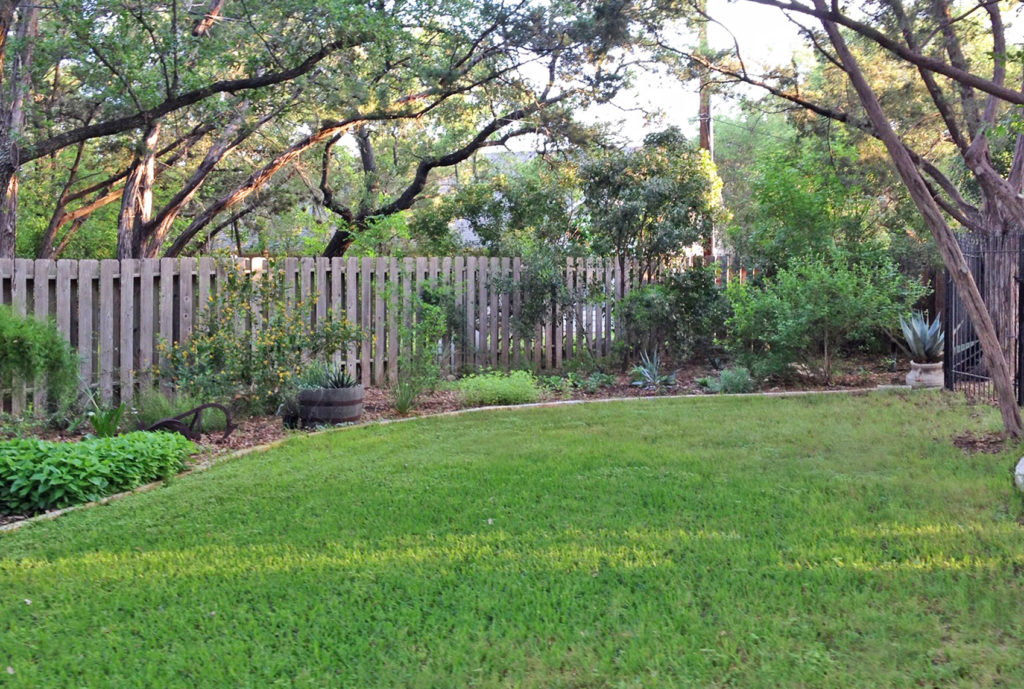
Spring Application of Pre-emergent Herbicide
Spring application of pre-emergent herbicide can relieve a lot of stress for both you and your lawn.
Remember the old adage “an ounce of prevention is worth a pound of cure”? That seems to have been written about the use of pre-emergent herbicides. Who wouldn’t prefer spreading a product on our lawns and beds that STOPS the weed BEFORE it comes up? A real no-brainer for me!
Identify the weed that you are wanting to control
Because weeds are classified as warm-season or cool-season based on germination temperature, you can control seeds germinating by applying pre-emergent at the right time of year. Target the timing, and you target the weed. I’ve said it before, and I’ll say it again—timing is everything in weed control.
Correct identification is the most important factor in choosing the right product and application time. If a weed caused problems last year, it will likely return this year. Bring samples to Backbone Valley Nursery, and we will identify them for you. Know whether the weeds are grassy or broadleaf, annual or perennial, and whether they germinate in spring (warm season) or fall (cool season). The right product, applied at the right time, delivers results.
Are pre-emergent products safe to use under the canopy of trees?
You have all probably heard of the dangers of using “Weed and Feed” products on your lawns. This primarily relates to the POST-EMERGENT BROADLEAF WEED KILLER products sold in the spring. Pre-emergent products are much safer to use around established trees, as they only stop weeds from germinating, and are not active in killing established roots. However, do not use them under trees that produce fruit or nuts for consumption. Always read label directions for additional precautions.
What type of pre-emergent herbicides are available?
We have both Organic and Chemical forms of pre-emergent available for use in the landscape. When using the Chemical forms, please read the instructions on the bag regarding how long to keep kids and pets off the lawn after application. In most cases, it is long enough for the lawn to dry after watering the product in, but be sure to check specifics.
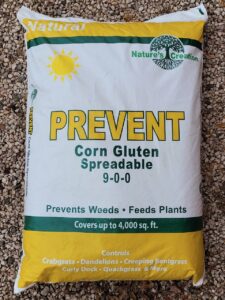

Corn gluten meal is a by-product of corn milling. It provides an organic alternative to chemical pre-emergents. It also supplies slow-release nitrogen, containing about 10% nitrogen by weight. This product is especially recommended for use near lakes or other water sources.
Timing determines success. Apply corn gluten meal before weeds emerge from seed. Proper moisture management also matters. Corn gluten meal prevents root formation in germinating seeds. Weeds sprout, form a short bent root, and then fail to establish. A brief dry period after germination stops root recovery. Excess water after germination may allow roots to regrow.
Water the product in with about ¼ inch of water at application. Then allow several (4-5) days of dry weather with no irrigation. This dry period is essential for effective weed control.
Apply corn gluten meal to lawns and beds in mid-September through early October. Reapply in February in Central Texas. Use a minimum rate of 20 pounds per 1,000 square feet.
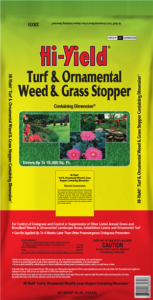

HiYield Weed and Grass Stopper with Dimension: This chemical form of pre-emergent is safe on established lawns such as Buffalo Grass, Bermuda, St. Augustine and Zoysia as well as on established landscape beds. It is an excellent Crabgrass preventer, and also has post-emergent activity on Crabgrass for up to 4 weeks after it has emerged. For best results, apply the product a few days after mowing and delay mowing for a few days after application. Water it in with about ½” of water. In southern lawns, it is usually applied at the rate of 4-9#/1000 Sq. ft.
As with all chemical products, be sure to read the label and follow all recommendations. Click HERE for label.
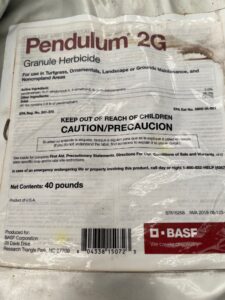
Pendulum 2G is a chemical form of pre-emergent that is safe to use on established Bermuda, Buffalo grass, St. Augustine and Zoysia. It will not harm most tree species. It is best applied when the ground temperature is between 55-85 degrees. It will prevent germination of over 50 broadleaf and grassy weed species such as Annual Bluegrass, Chickweed, Purslane, Spurge, Oxalis, Crabgrass and Barnyard Grass. Usual application is in mid-September for cool-season weeds and in mid- February for warm-season weeds, such as Field Sandburs (yes, it even prevents Grass Burs!) Use at a rate of 4.6#/1000 sq.ft. A 40# bag will cover 21,780 sq.ft. (1/2 acre) Click HERE for label.
Most importantly, proper application rate can be just as important to your success as the timing of the application! As always, read the label for application and use precautions.